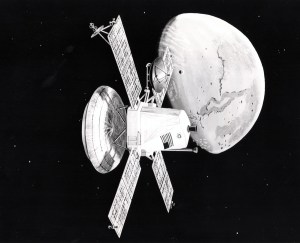
Image credit: NASA
Image source: Mike Acs
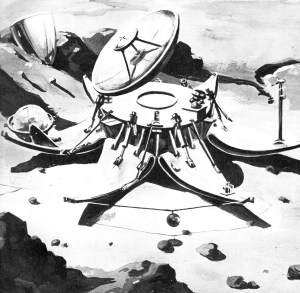
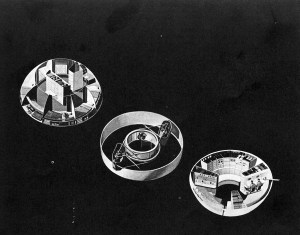
Prime goal of Project Viking is this National Aeronautics and Space Administration sketch, to land a biological laboratory on the surface of Mars. The picture shows a design in which the protective housing around the experiments unfolds in petal fashion once the laboratory is safely on the Martian surface.
Project Viking: Space Conquest Beyond the Moon
by Irwin Stambler
G.P. Putnam’s Sons, 1970
Image credit: NASA
Image source: Numbers Station
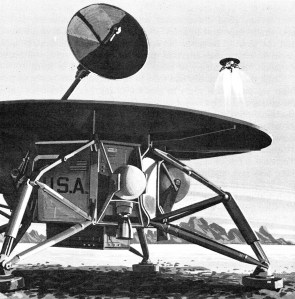
Project Viking: Space Conquest Beyond the Moon
by Irwin Stambler
G.P. Putnam’s Sons, 1970
Image credit: NASA
Image source: Numbers Station
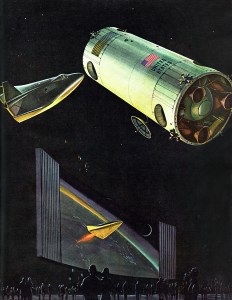
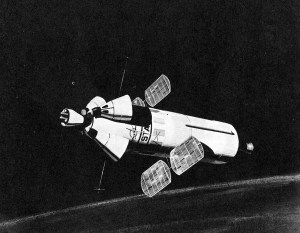
A spaceport and supply rocket designed by the Martin Marietta Corporation in mid-air in this scene from the Hall of Science space show. In such a port, astronauts may orbit for half a year.
New York World’s Fair 1964/1965
Official Souvenir Book
Time Life, 1964
Image credit: Martin Marietta
Image source: Numbers Station

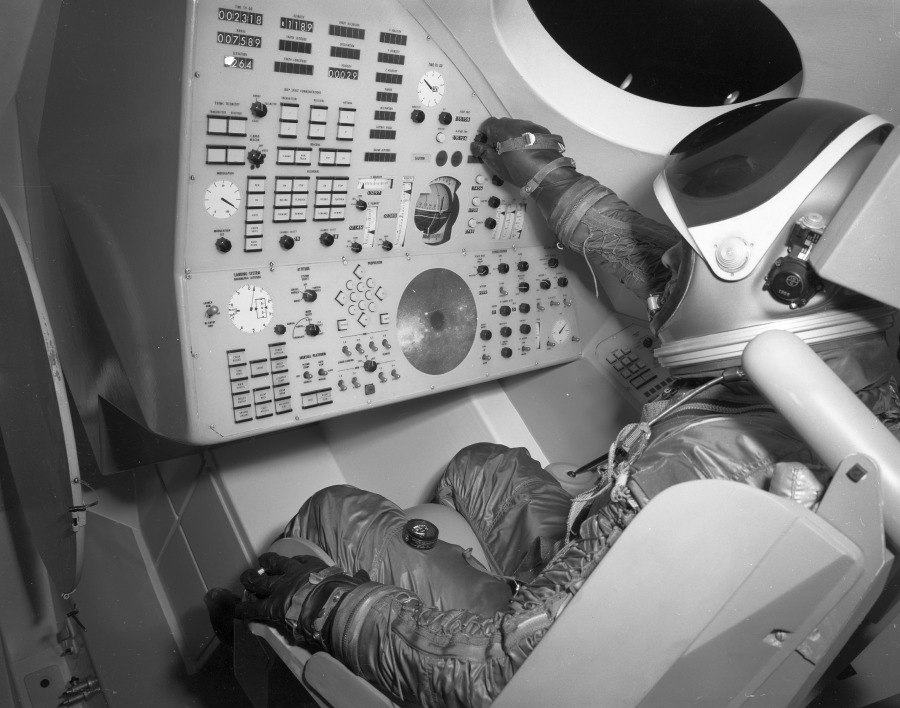
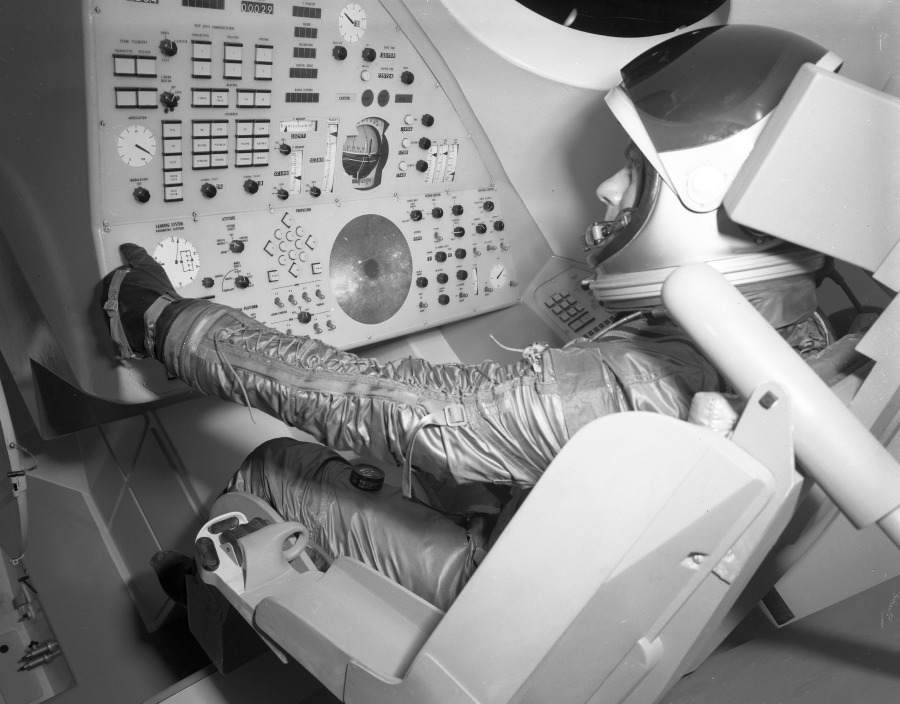
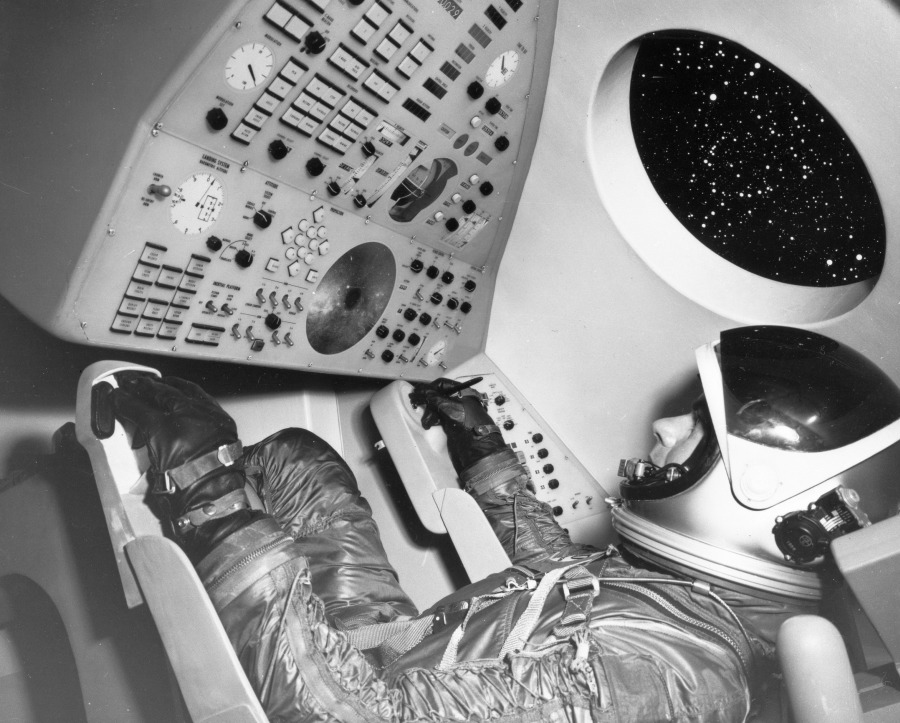
Image credit: Convair
Image source: SDASM Archives
Space World
November 1964, VOL. A-13
Image credit: Douglas
Image source: SDASM Archives
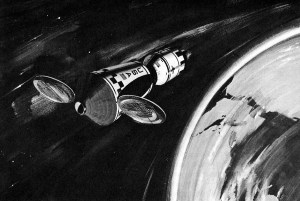
Medium-sized orbiting lab is this Manned Orbital Research Laboratory (MORL) developed for NASA’s Langley Lab by Douglas Missiles & Spacecraft Division. The lab which weighs about 35,000 pounds, could maintain 3 to 6 men in orbit for a year.
Orbiting Stations: Stopovers to Space Travel
Irwin Stambler
G.P. Putnam’s Sons, 1965
Image credit: Douglas
Image source: SDASM Archives
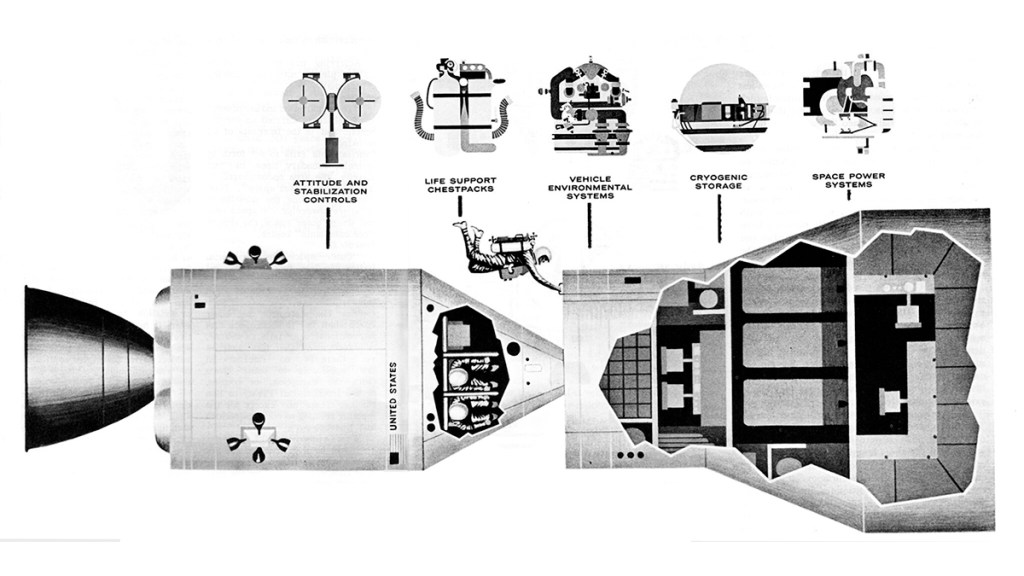
An “extended” Apollo would be able to travel for several months in space. Garrett concepts of environmental system, cryogenic storage, life-support and attitude control can be adapted to this vehicle.
Space World
December 1964, VOL. A-14
Image credit: Marquardt Corporation
Image source: Numbers Station

The Marquardt Corporation is conducting studies under contract to North American’s Space and Information Systems Division on advanced rocket reaction control systems for Apollo X. The Extended Apollo Mission is depicted above in conjunction with a space laboratory system, one of several concepts to determine additional applications of the Apollo spacecraft by NASA. Marquardt’s four-engine reaction control system cluster is illustrated above on the surface of the Apollo X service module. Similar systems are being developed by Marquardt for the current Project Apollo lunar mission on both the service and lunar excursion module.
Space World
April 1965, VOL. B-4.18
Image credit: Marquardt Corporation
Image source: Numbers Station

Image credit: NASA
Image source: Numbers Station
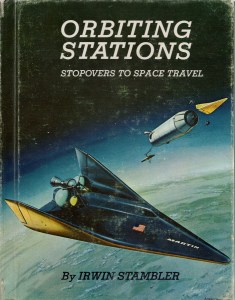
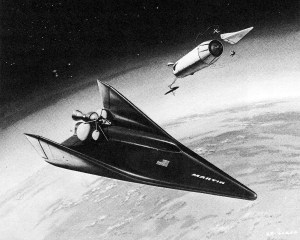
Orbiting Stations: Stopovers to Space Travel
Irwin Stambler
G.P. Putnam’s Sons, 1965
Image credit: Martin Marietta
Image source: Numbers Station
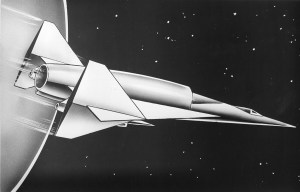
This drawing from the magazine Air Force and Space Digest shows a proposed NASA “ONE-STAGE-TO-ORBIT” aerospace plane. The craft would be able to take off from a regular airport using turbojet engines, then switch to ramjet propulsion at supersonic speed. To reach orbital speed in space, the aerospace plane would use a third set of engines using rocket propulsion.
In the drawing (above) the combination turbo-ramjet engines are housed in pods, just inside the vertical tailfins (on either side). The huge scoop atop the rear half of the fuselage contains the rocket engines and a novel collection and compression unit for gathering oxygen to burn in the rockets. The other propellant would be liquid oxygen carried in the craft’s tanks.
After it’s orbital mission, the aerospace plane would be able to reenter the atmosphere and land as a conventional aircraft at an airfield. The craft would be about 90 feet long and weigh some 100,000 pounds.
CREDIT LINE (UPI PHOTO) 7-21-62 (ML)
UNITED PRESS INTERNATIONAL ROTO SERVICE
Image credit: USAF
Image source: Numbers Station
