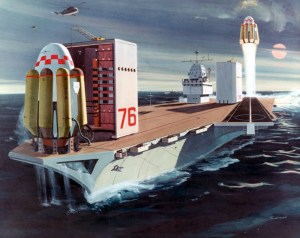
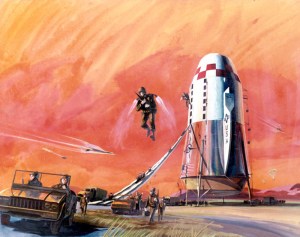
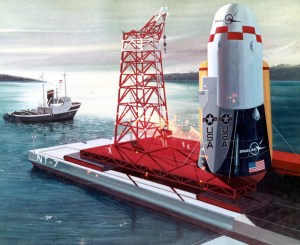
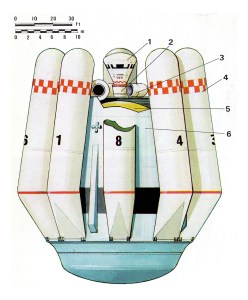
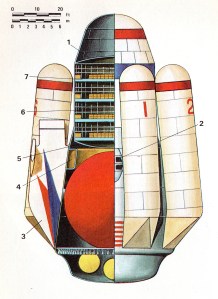
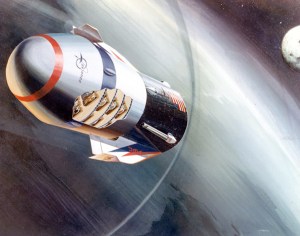
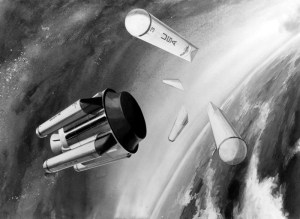
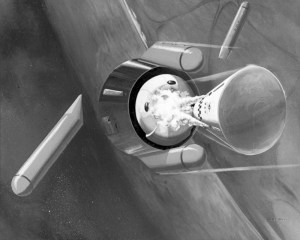
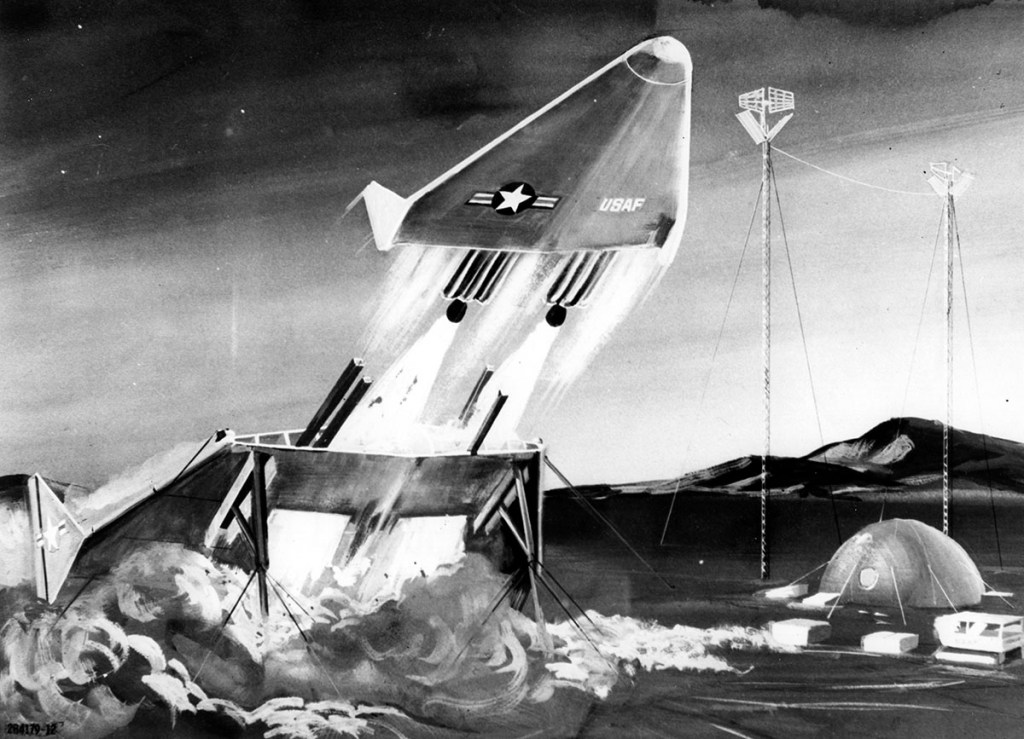
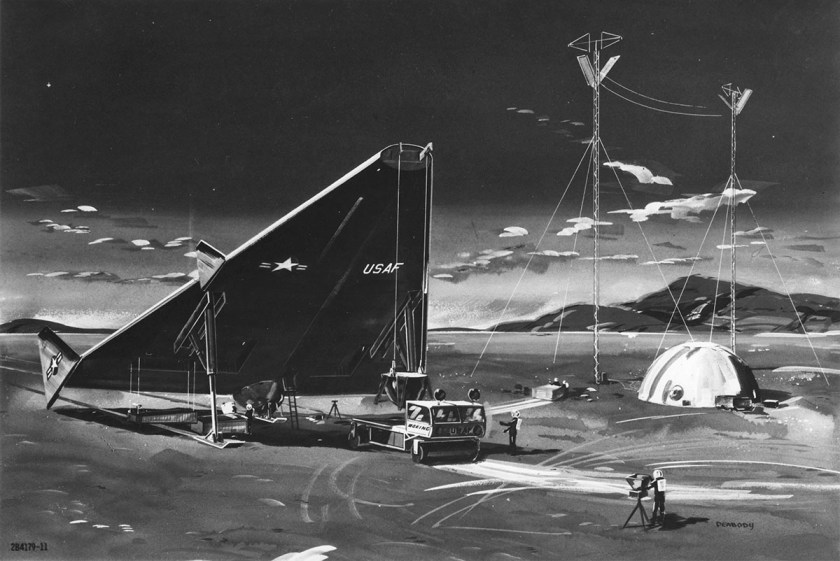
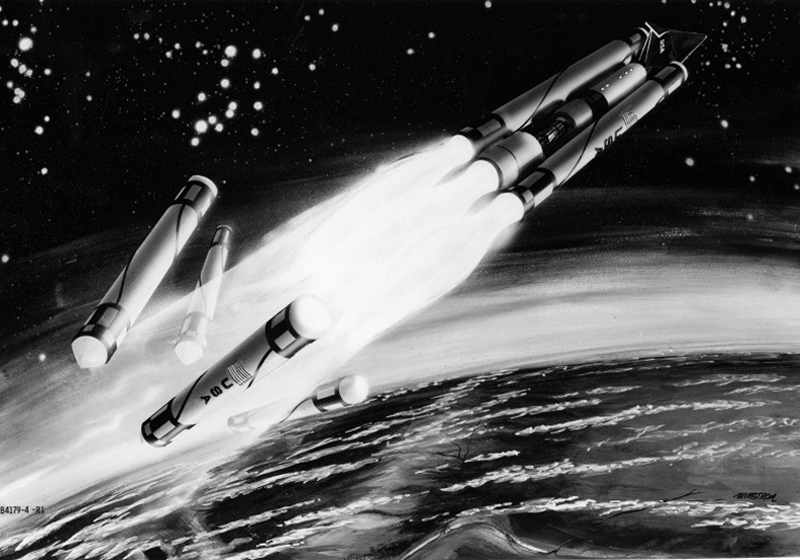
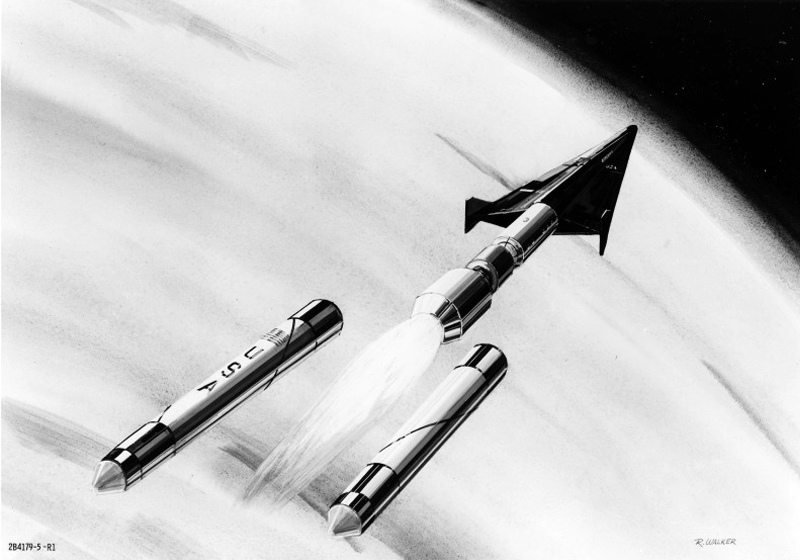
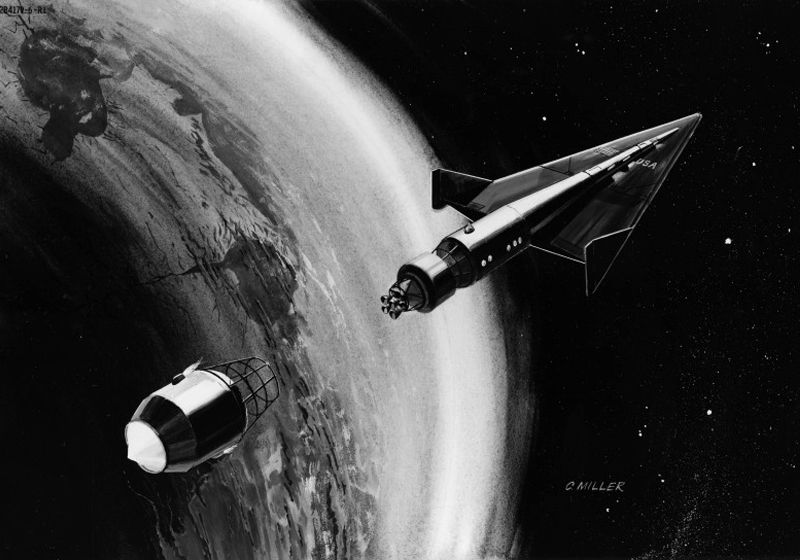
Pegasus during atmospheric re-entry uses the LH2-cooled plug nozzle as a heat shield. The ballistic transport would convey 172 passengers and freight 7,456 miles (12,000 km.) in 39 min. without exceeding an acceleration of 3g during ascent or re-entry. At the arrival spaceport it would hover on rocket thrust during a soft landing in the vertical attitude.
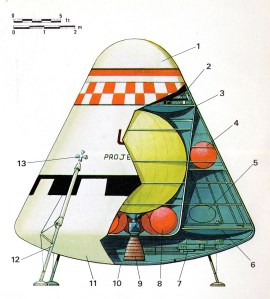
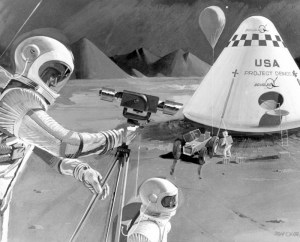
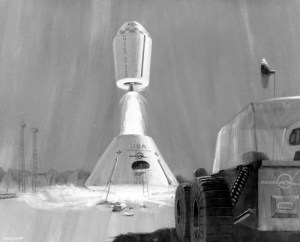
How re-usable ROMBUS-type launch vehicles can be applied to construction of a temporary lunar base (Project Selena).
Vehicle en route for the Moon is refuelled in Earth Orbit;
Soft-lands on the Moon with lunar base components;
Pressurized moon-tractor hauls hydrogen tanks adapted for human habitation to assembly site;
The lunar base is ready for occupation.
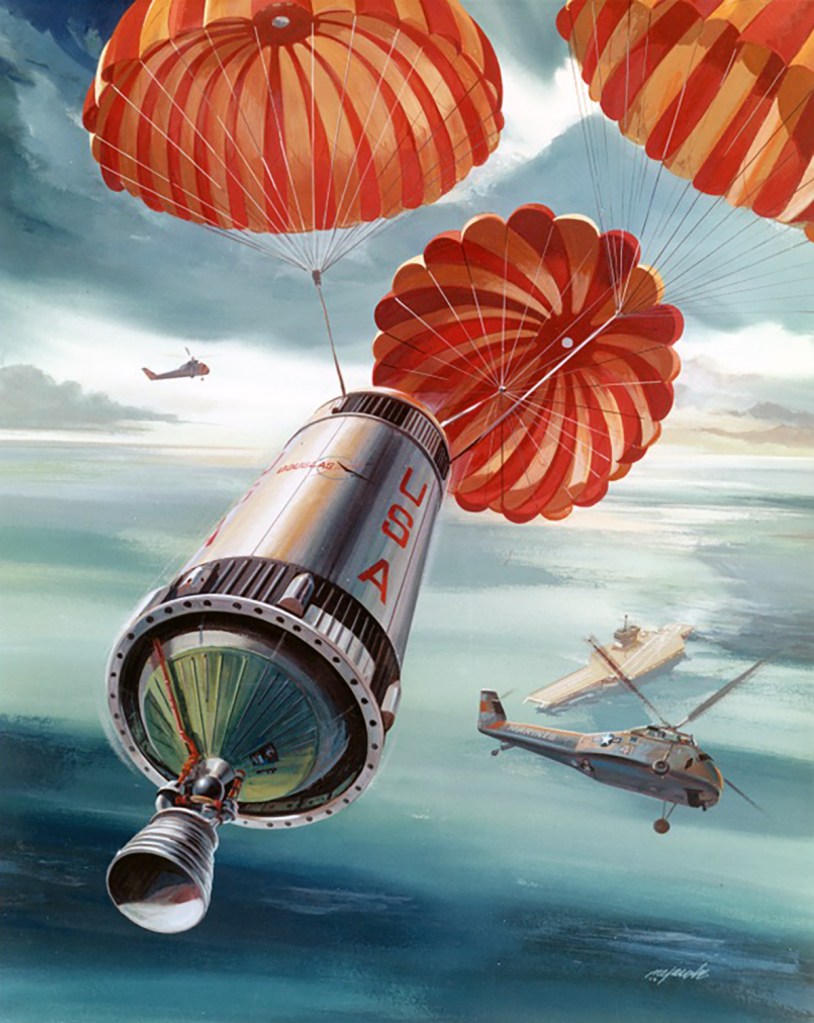
Frontiers of Space is peppered with artwork from Douglas, including paintings by Don Charles and James Finnell. In the book, this section was illustrated with (pretty poor) knock-offs. Why? Who knows? These were the masters.
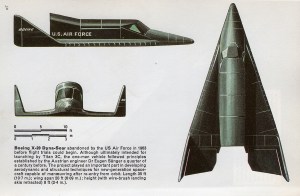
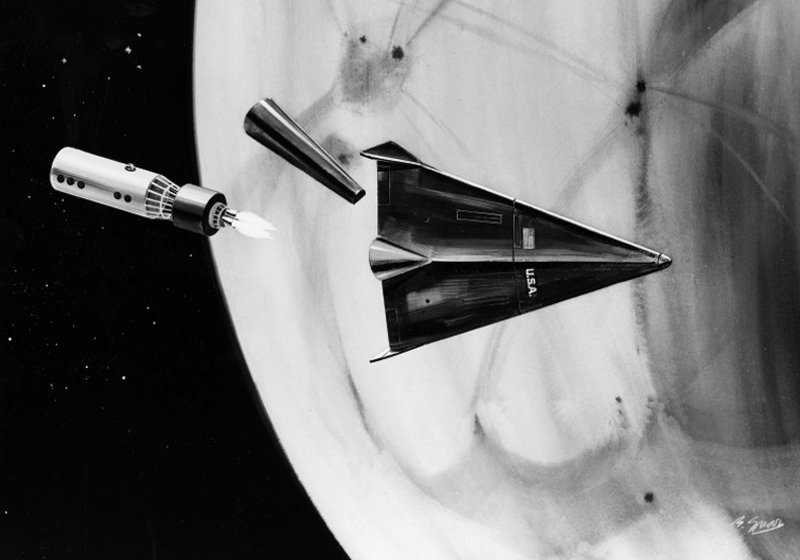
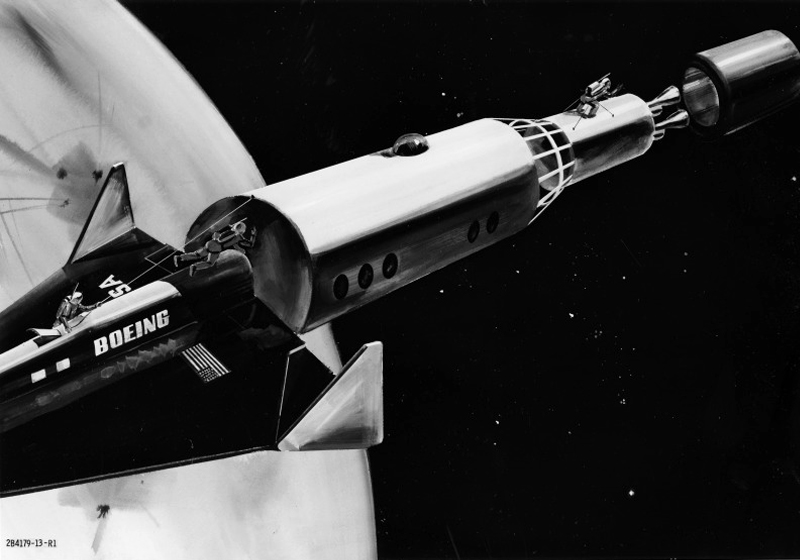
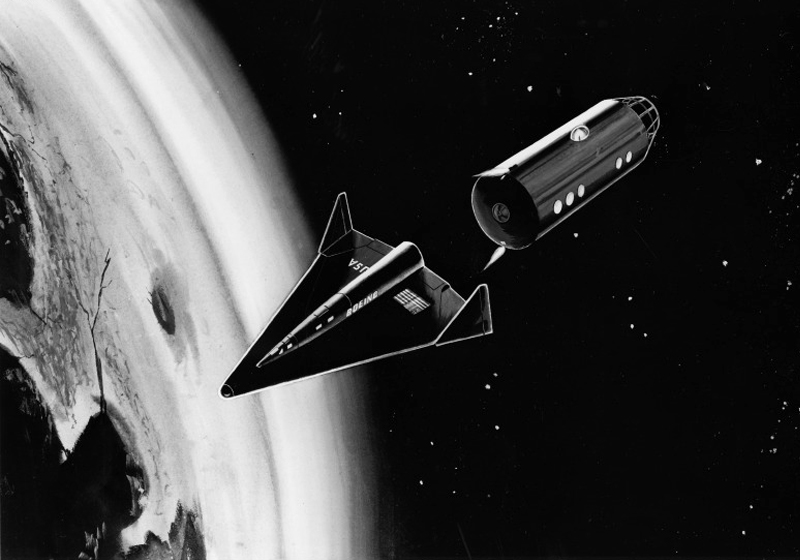
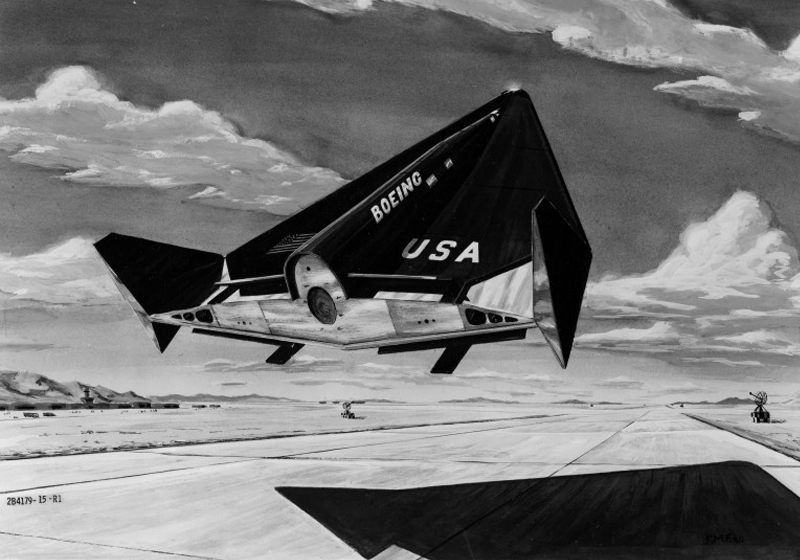
Boeing X-20 Dyna-Soar abandoned by the US Air Force in 1963 before flight trials could begin. Although ultimately intended for launching by Titan 3C, this one-man vehicle followed principles established by the Austrian engineer Dr Eugen Stänger a quarter of a century before. The project played an important part in developing aerodynamic and structural techniques for new-generation space-craft capable of maneuvering after re-entry from orbit. Length 35 ft (10.7m.) wingspan 20 ft (6.09m.); height (with wire-brush landing skis retracted) 8 ft (2.4m.).
Frontiers of Space Philip Bono & Kenneth Gatland Macmillan, 1969
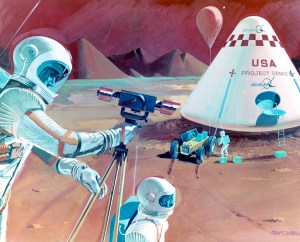
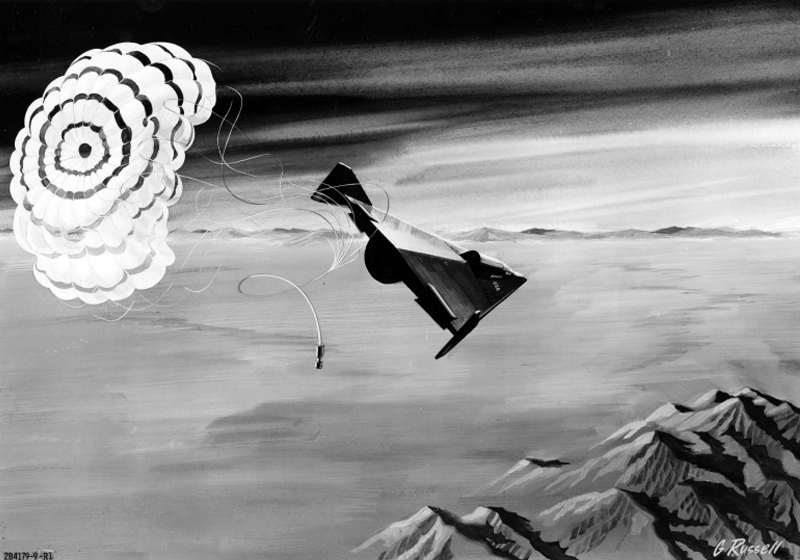
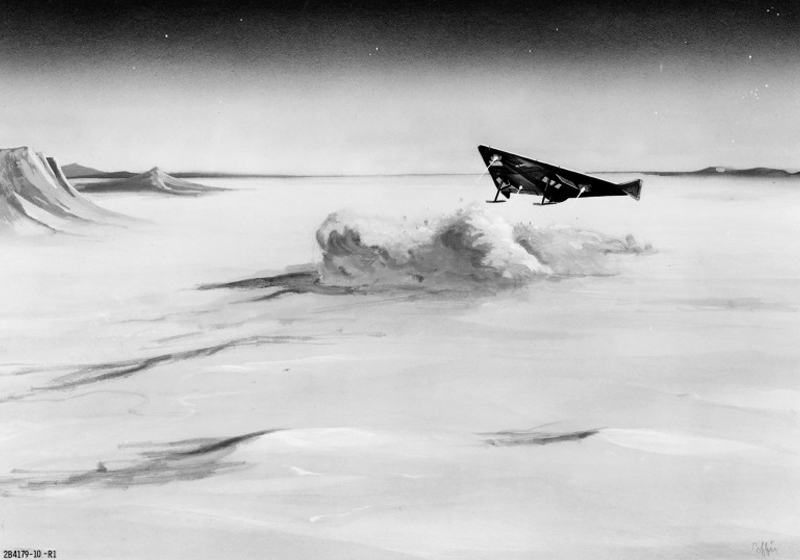
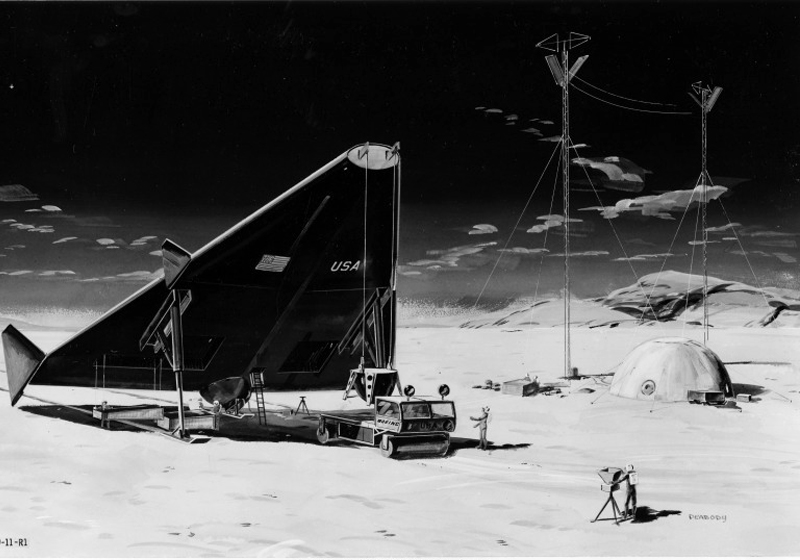
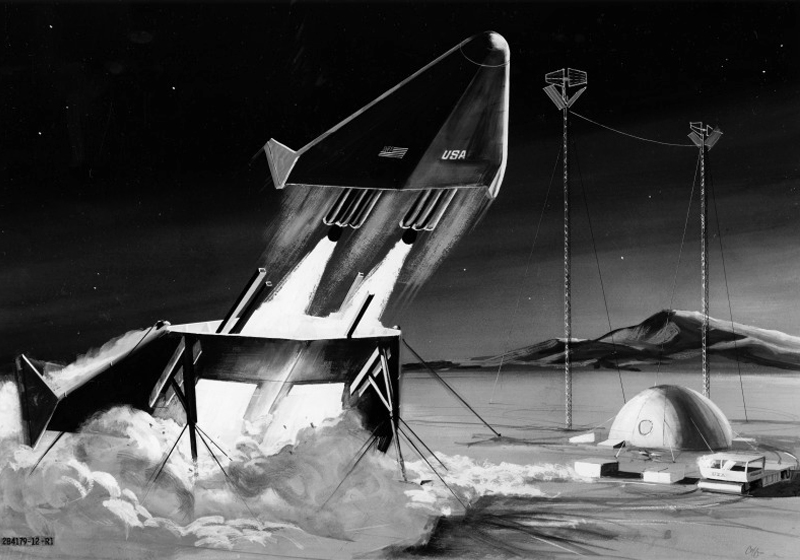
Having safely glided to a stop on a Martian plateau, this illustration depicts the Operational Phase of the mission. The crew have already inflated their six meter habitat (it’s a tent), assembled the flat-pack steamroller and are shown removing the nuclear reactor so it can be dragged at least a kilometer from base camp so it won’t kill them.
With the reactor at a safe distance, the crew of eight have 479 days to explore the surface of Mars and maybe do a spot of gardening.
You can read more about this fascinating 1960 Boeing Study here.
Image credit: Boeing / Chicago Daily News Image source: Numbers Station