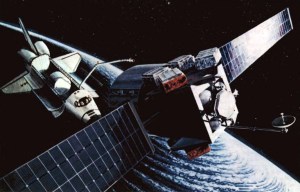
Image credit: Robert McCall
Image source: Numbers Station
Image credit: Robert McCall
Image source: Numbers Station
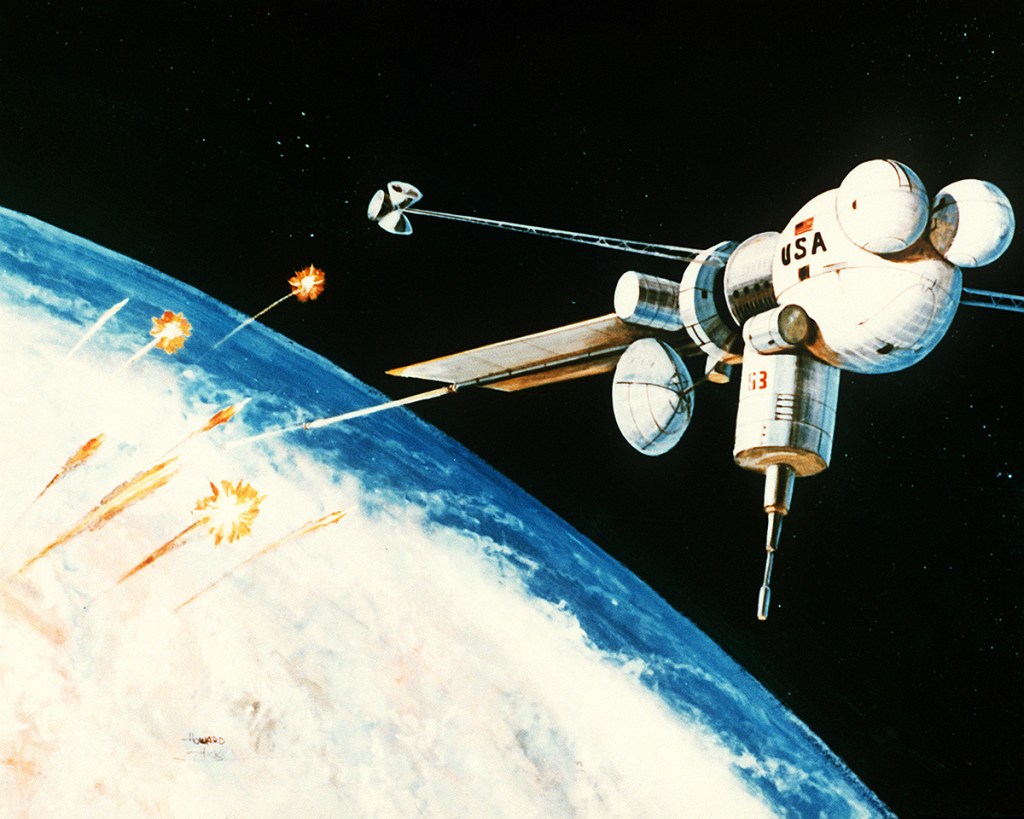
Image credit: LTV
Image source: National Archives
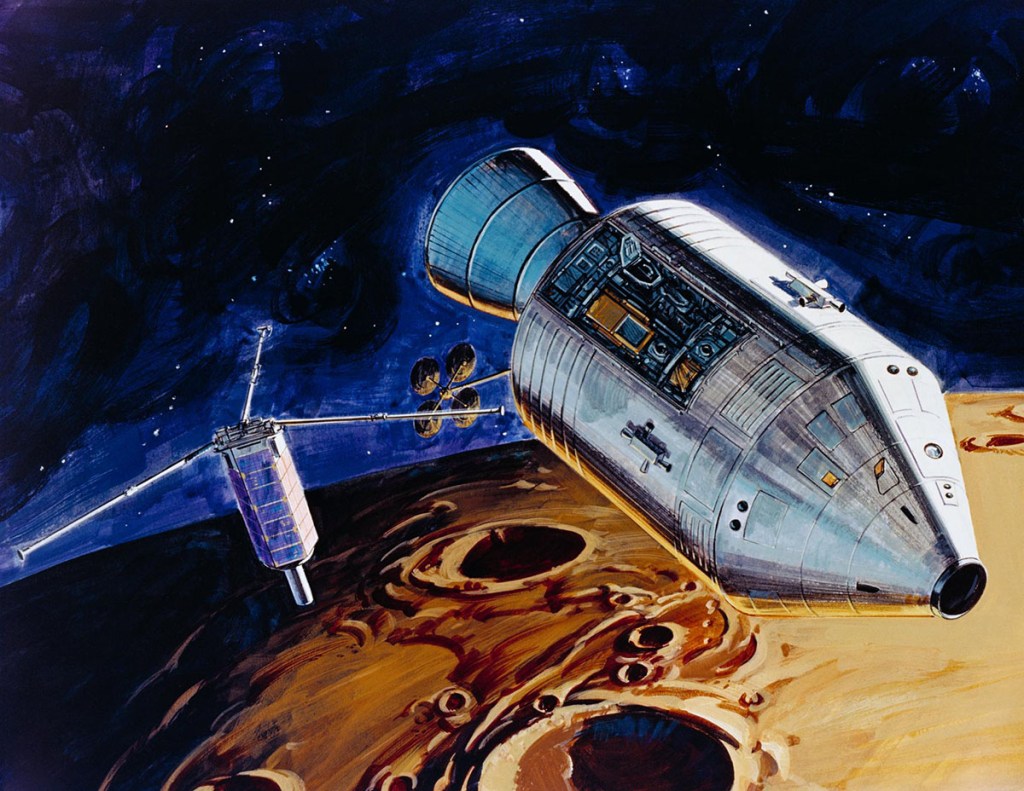
S71-39481 (July 1971) — An artist’s concept showing TRW’s small lunar subsatellite being ejected into lunar orbit from the SIM bay of the Apollo 15 Service Module. The 80-pound satellite will remain in orbit a year or more, carrying scientific experiments to study space in the vicinity of the moon. The satellite carries three experiments: S-Band Transponder; Particle Shadows/Boundary Layer Experiment; and Subsatellite Magnetometer Experiment. The subsatellite is housed in a container resembling a rural mailbox, and when deployed is spring-ejected out-of-plane at 4 fps with a spin rate of 140 rpm. After the satellite booms are deployed, the spin rate is stabilized at about 12 rpm. The subsatellite is 31 inches long and has a 14 inch hexagonal diameter. The exact weight is 78.5 pounds. The folded booms deploy to a length of five feet. Subsatellite electrical power is supplied by a solar cell array outputting 25 watts for dayside operation and a rechargeable silver-cadmium battery for nightside passes.
Image credit: NASA JSC
Image source: NASA Images
Image credit: NASA JSC
Image source: NASA Images
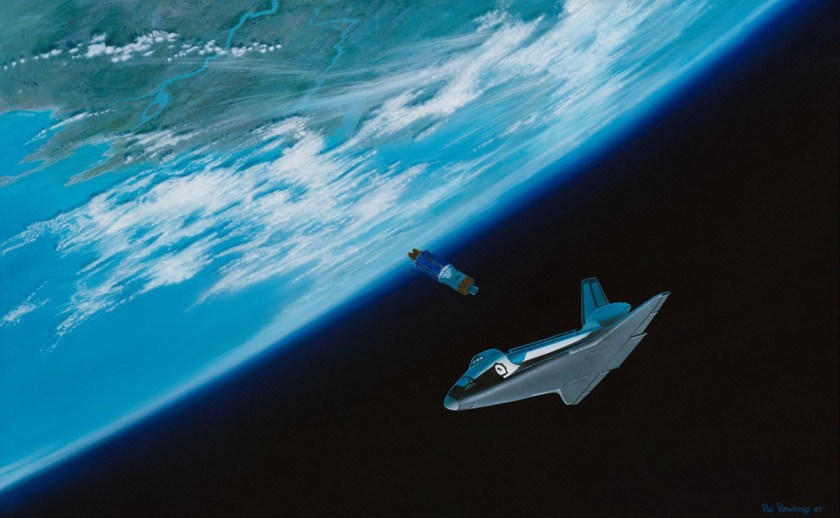
STS-26 Discovery, Orbiter Vehicle (OV) 103, artwork depicts tracking and data relay satellite C (TDRS-C) deployment. OV-103 orbits above Earth in bottom-to-sun attitude, moments after TDRS-C’s release into space. TDRS-C is seen just below open payload bay (PLB). Artwork was done by Pat Rawlings of Eagle Engineering.
Image credit: NASA JSC
Image source: NASA Images
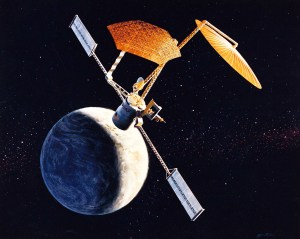
Image credit: NASA
Image source: SDASM Archives
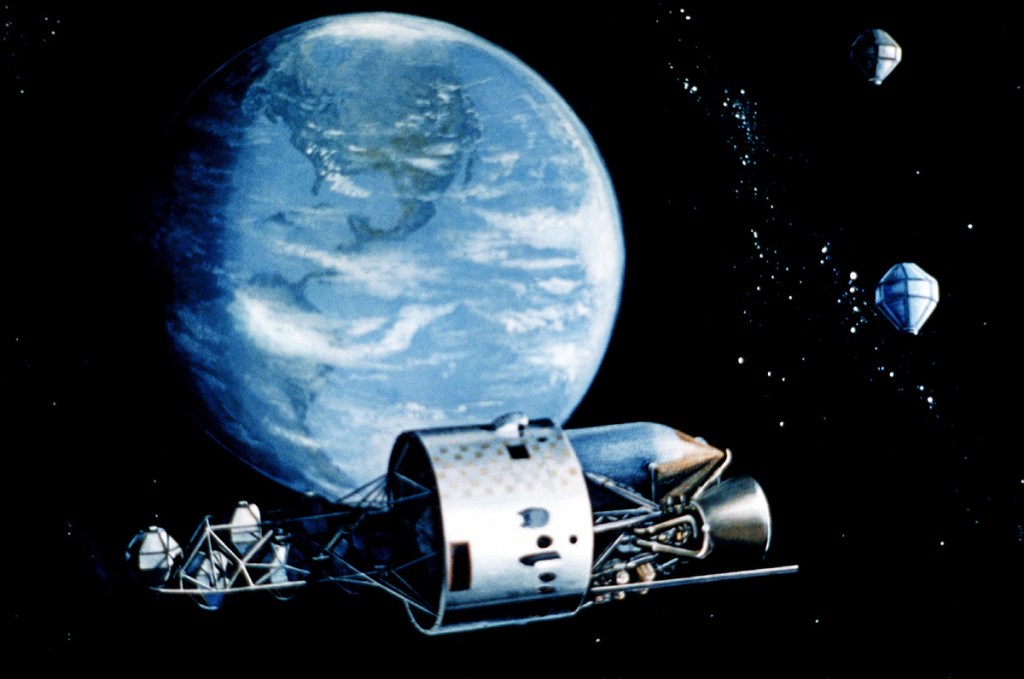
Image credit: Martin Marietta
Image source: National Archives
Image credit: North American Rockwell
Image source: SDASM Archives
Image credit: NASA
Image source: SDASM Archives