Image credit: North American Rockwell
Image source: Numbers Station
Image credit: North American Rockwell
Image source: Numbers Station
Image credit: North American Rockwell
Image source: Numbers Station

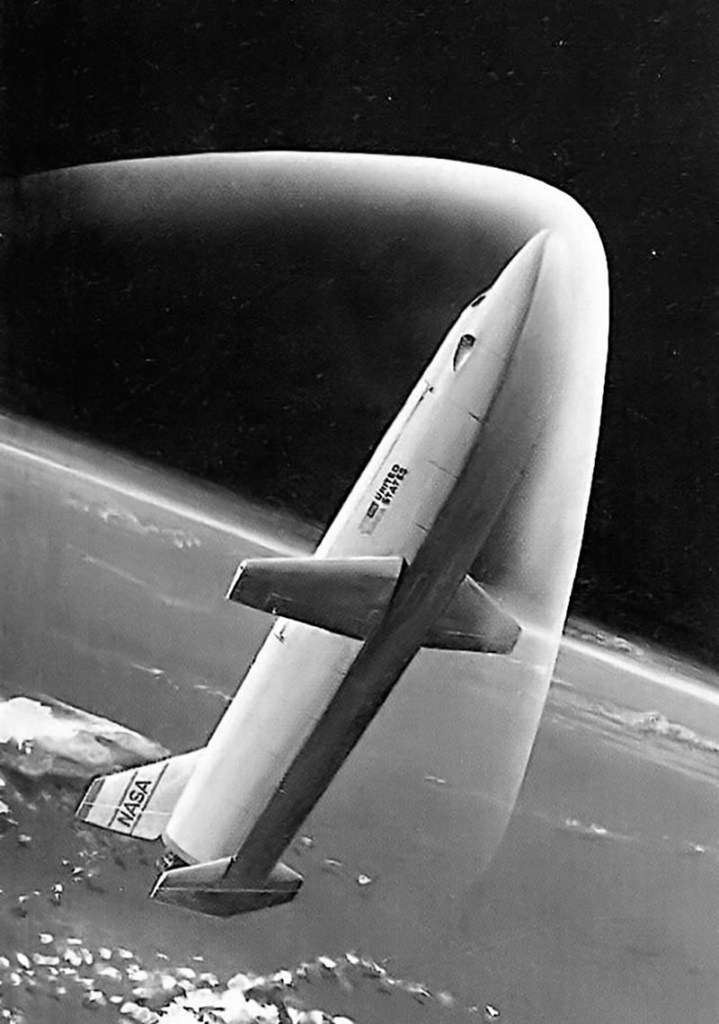
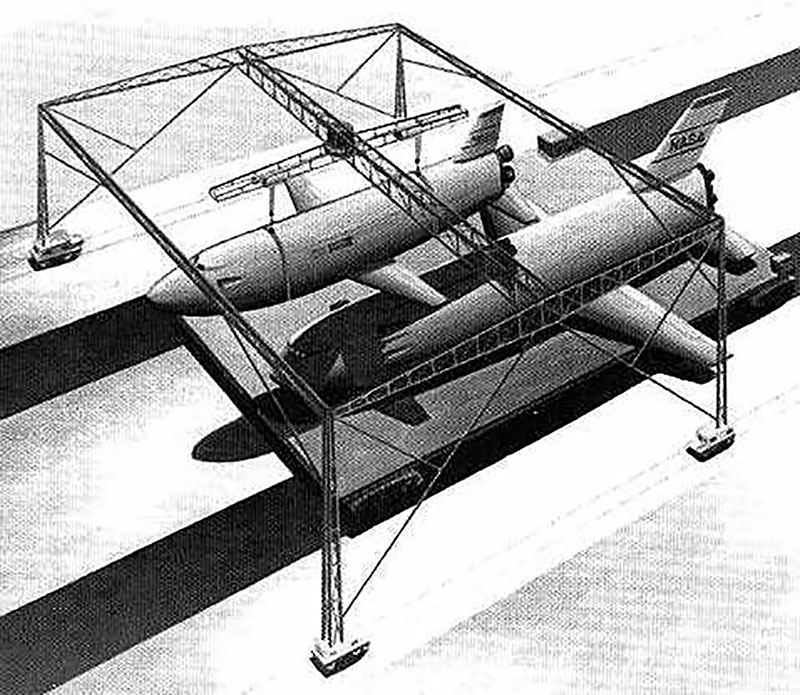

Image credit: North American Rockwell
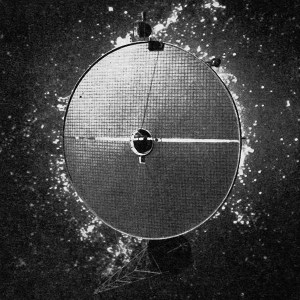
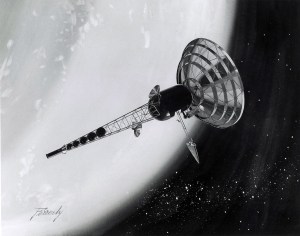
A Boeing design study for a Mars exploration probe, 40 ft. in diameter and weighing 600 lb. Assembled and launched at a space-station, the unmanned probe would draw its power from the Sun. Propelled by an ion rocket, it would take three years to orbit Mars and return.
Eagle Book of Rockets and Space
Longacre Press, 1961
Right:
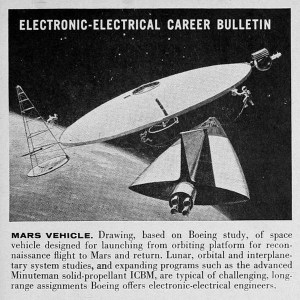
MARS VEHICLE. Drawing, based on Boeing study, of space vehicle designed for launching from orbiting platform for reconnaissance flight to Mars and return. Lunar, orbital and interplanetary system studies, and expanding programs such as the advanced Minuteman solid-propellant ICBM, are typical of challenging assignments Boeing offers electronic-electrical engineers.
Missiles and Rockets
December 7, 1959
Image credit: Boeing Aircraft Company
Image source(s): Numbers Station, Internet Archive
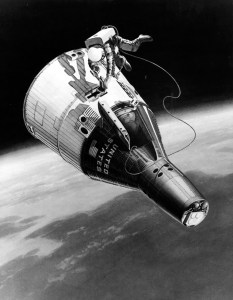
Image credit: NASA
Image source: SDASM Archives
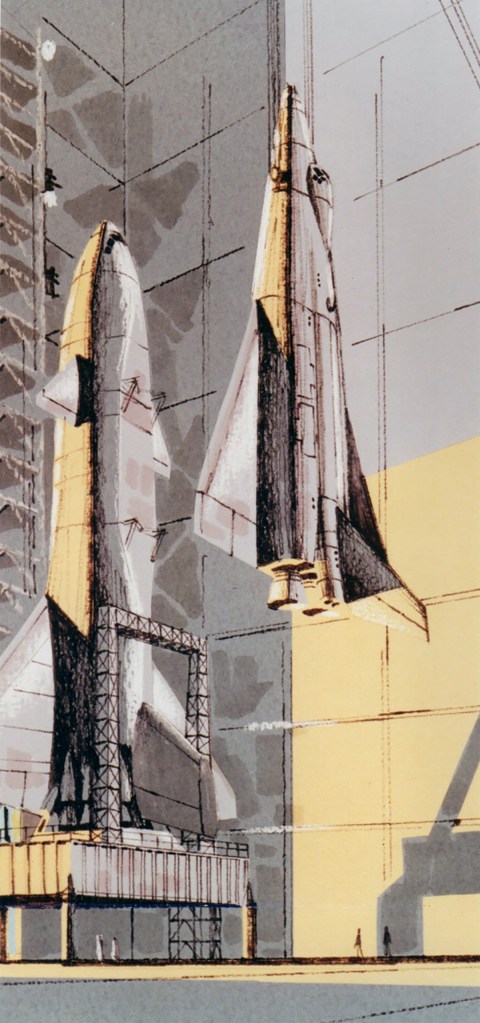
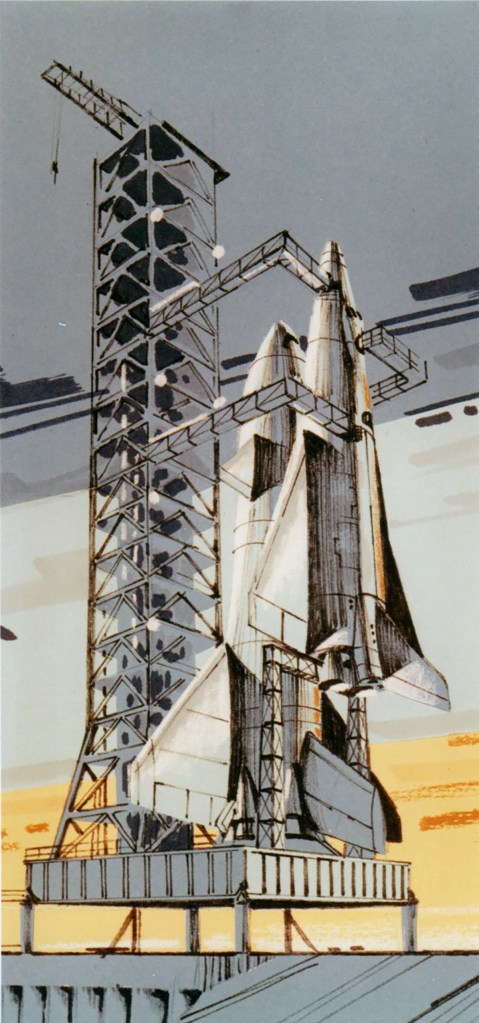
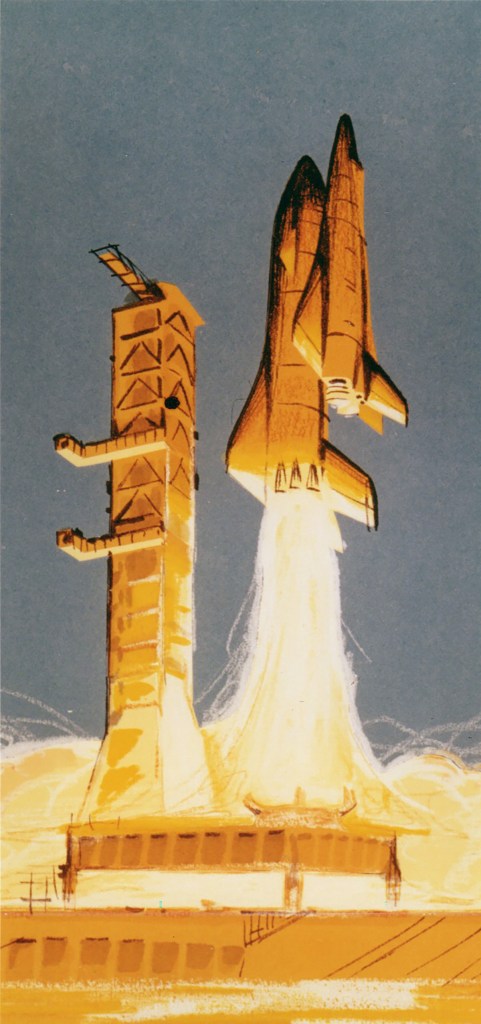
Image credit: North American Rockwell
Image source: Numbers Station
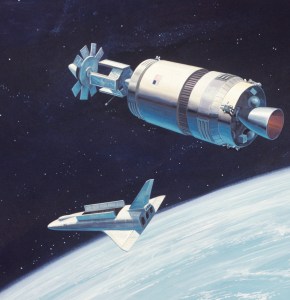
Image credit: North American Rockwell
Image source: Numbers Station
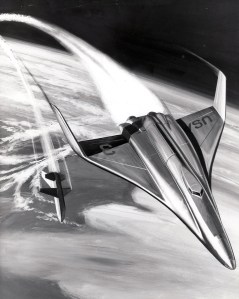
Just to illustrate just how utterly massive the R-134B would have been, take a look at this illustration from a report written by Jack Swigert for The Society of Experimental Test Pilots:
Image credit: NASA
Image source: Mike Acs
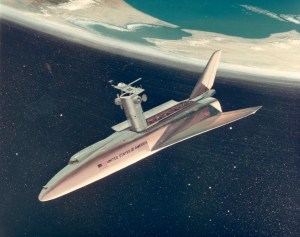
Image credit: North American Rockwell
Image source: Numbers Station
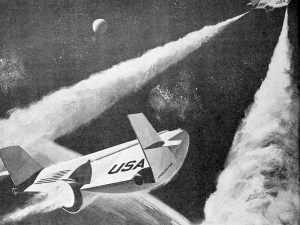
ASTRO — a manned reusable spacecraft concept developed by Douglas Aircraft.
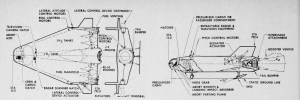
PLAN AND ELEVATION views of ASTRO A2 vehicle. Note booster vehicle attachment at aft end.
Missiles and Rockets, September 3, 1962
Image credit: Douglas
Image source: Internet Archive