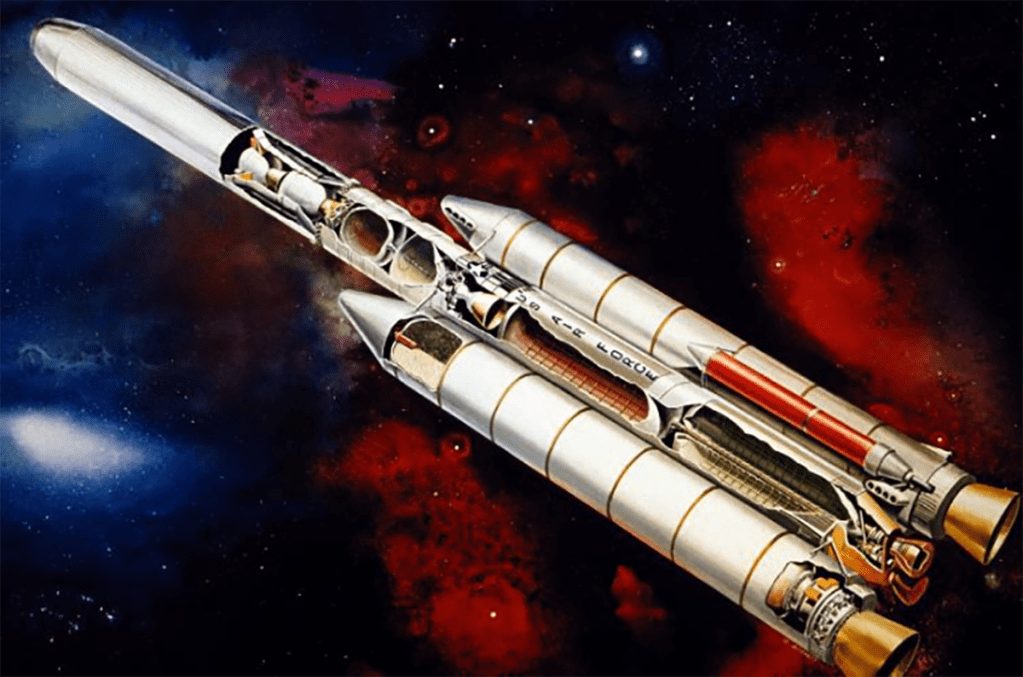
Artist’s concept of the Titan standard launch vehicle 34-D entering the space.
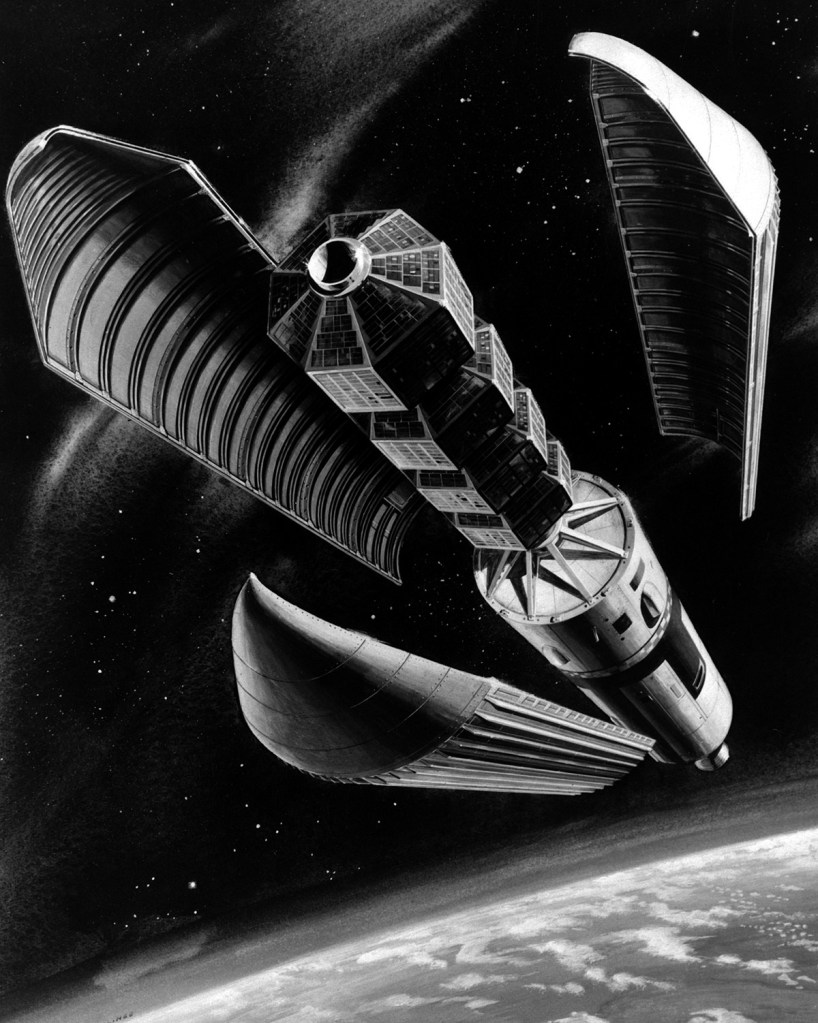
An artist’s concept of the new modular three-section fairing for the Air Force’s Titan III-C space launch vehicle.
Image credit: USAF
Image source: National Archives
Artist’s concept of the Titan standard launch vehicle 34-D entering the space.
An artist’s concept of the new modular three-section fairing for the Air Force’s Titan III-C space launch vehicle.
Image credit: USAF
Image source: National Archives
Mars: Planet for Conquest
by Erik Bergaust
G.P Putnam’s Sons, 1967
Image source: Numbers Station

Electrostatic ion-powered five-man spacecraft passing over Mars’ moon Phobos on the way to Mars. One of two “scout cars” will land on the tiny moon and rendezvous with the ship later.
Mars: Planet for Conquest
by Erik Bergaust
G.P Putnam’s Sons, 1967
Rocketdyne
Image source: Numbers Station
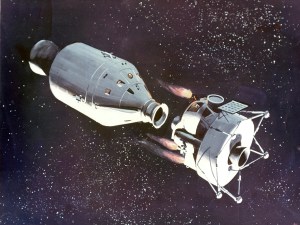
Image credit: NASA
Image source: Mike Acs
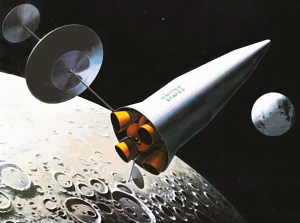
Image credit: General Electric
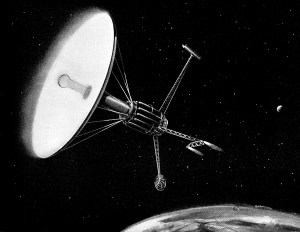
Complex space vehicles from Earth in orbit around Mars some time in the late 70’s, as visualized by today’s engineers.
The Next Fifty Years in Space
by Erik Bergaust
Macmillan, 1964
Image credit: Rocketdyne
Image source: Numbers Station
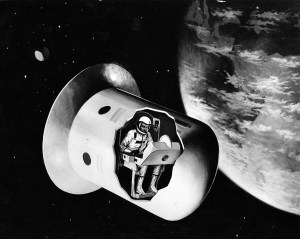
Image credit: General Electric
Image source: Numbers Station