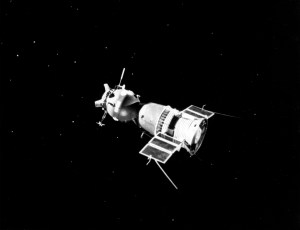
ASTP

DECEMBER 1974

MOSCOW, UNION OF SOVIET SOCIALIST REPUBLICS

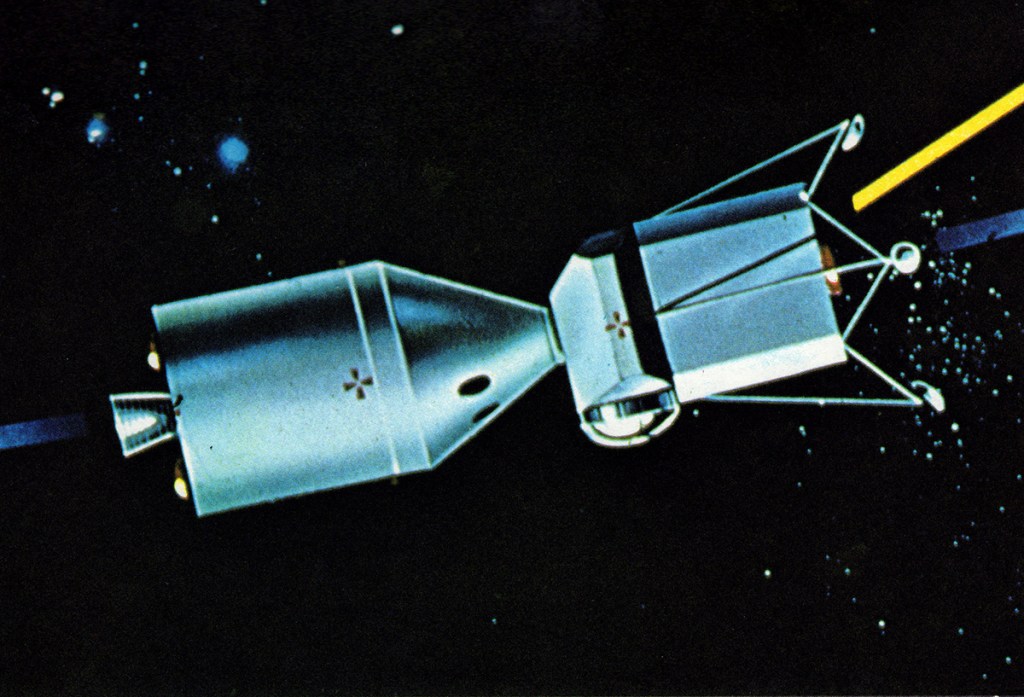
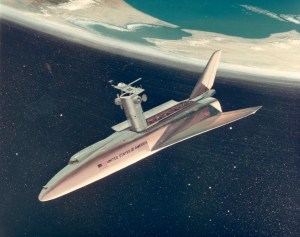
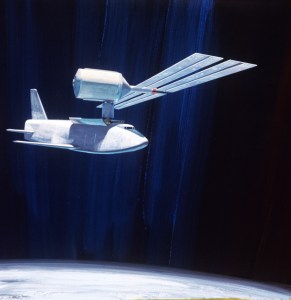
SOYUZ 16 CONCEPT —- An artist’s concept depicting the Soviet Soyuz 16 spacecraft in Earth orbit. The six-day Soyuz 16 Earth-orbital mission flown December 2-8, 1974, was a Soviet rehearsal for the joint U.S.-USSR Apollo-Soyuz Test Project. The crew of Soyuz 16 was Cosmonauts Anatolly V. Filipophenko, commander; and Hikolay H. Rukavishnikov, engineer. These two me are the Soviet ASTP second (back-up) crew, also. The three major components of the Soyuz spacecraft are the sphere-shaped orbital module, the decent vehicle (in center), and the instrument assembly module. Two solar panels extend out from the IA module. A docking mechanism to test the Soviet ASTP androgenous docking system (seen attached to the orbital module) was flown on the Soyuz 16 flight. This picture was made from a frame of 35mm motion picture film.

PHOTO COURTESY: USSR ACADEMY OF SCIENCES
PHOTO CREDIT: NASA or National Aeronautics and Space Administration

Image credit: NASA
Image source: Numbers Station
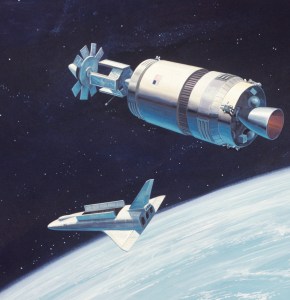
Artist’s Rendering

Image credit: North American Rockwell
Image source: Numbers Station

Skylab (McCall)

Our World in Space
Robert McCall & Isaac Asimov
New York Graphic Society, 1974

Image credit: NASA
Image source: Numbers Station
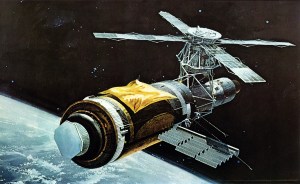
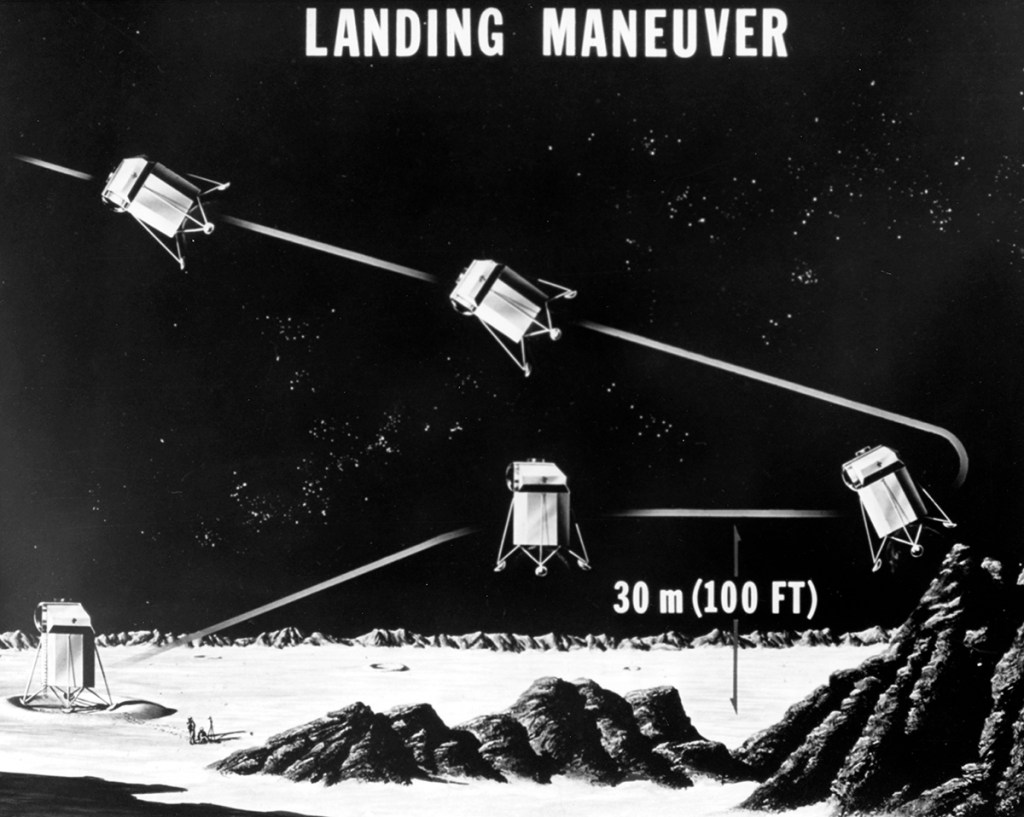
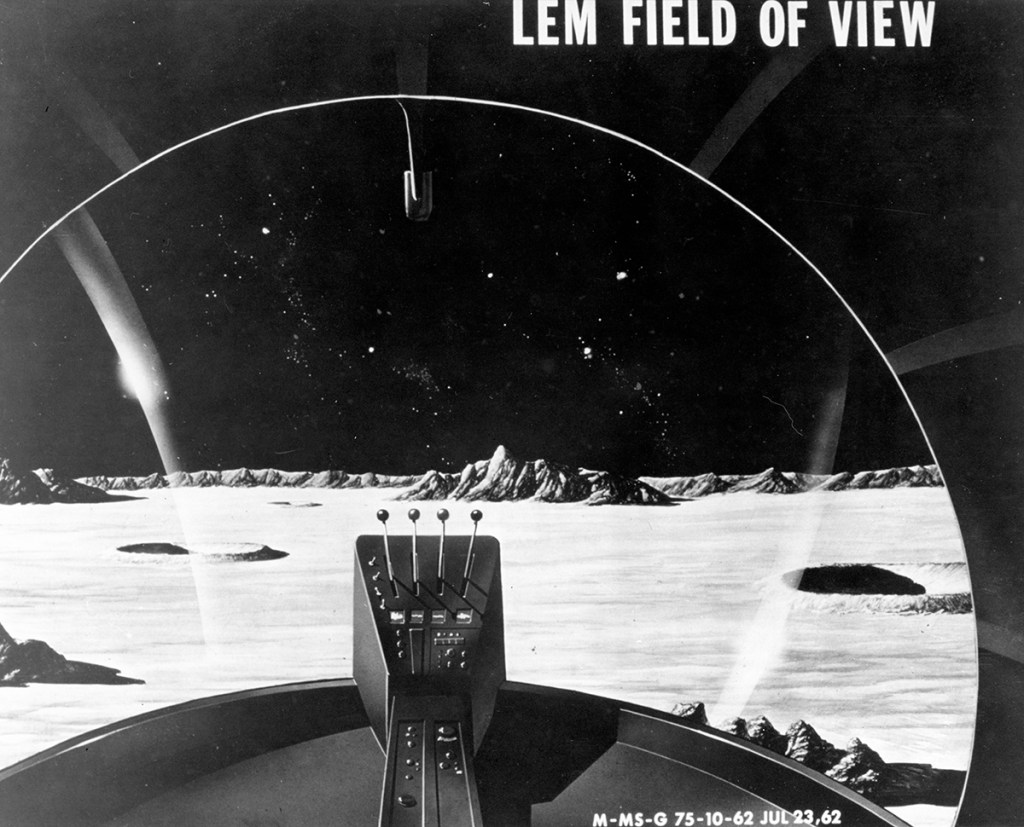
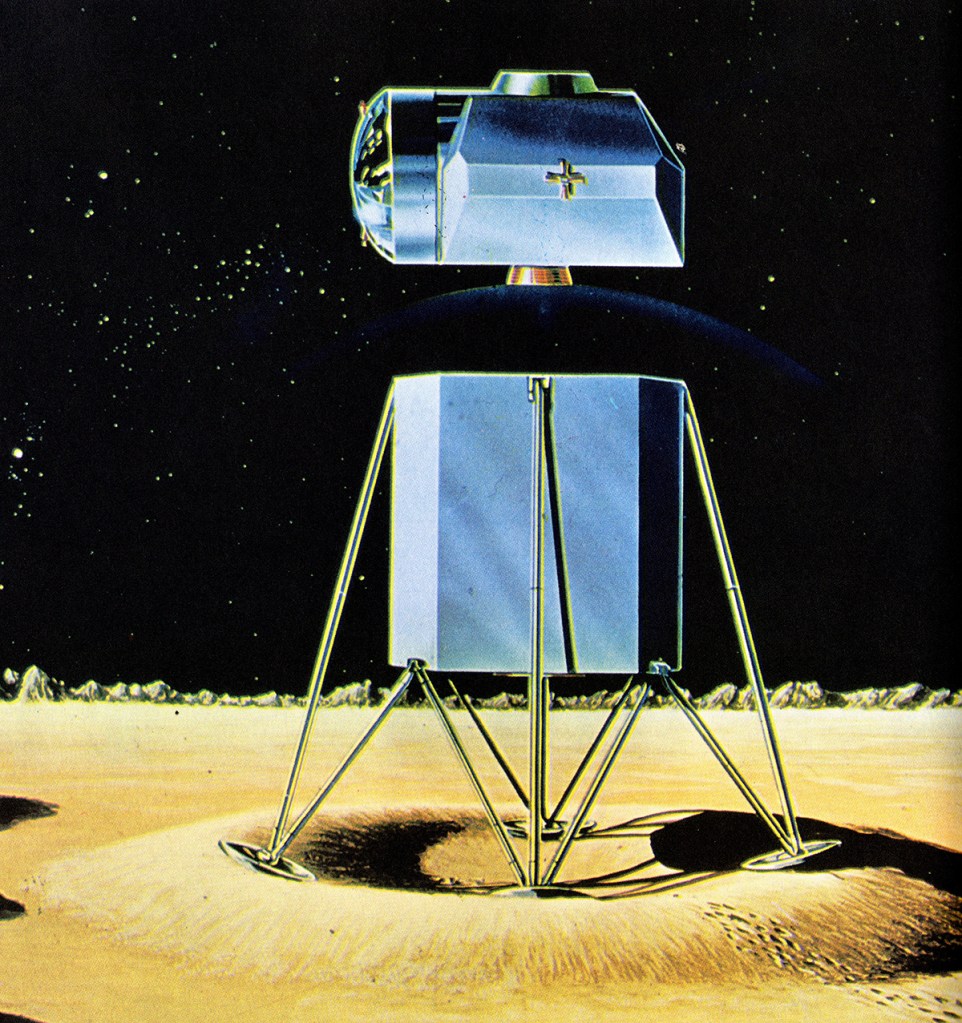
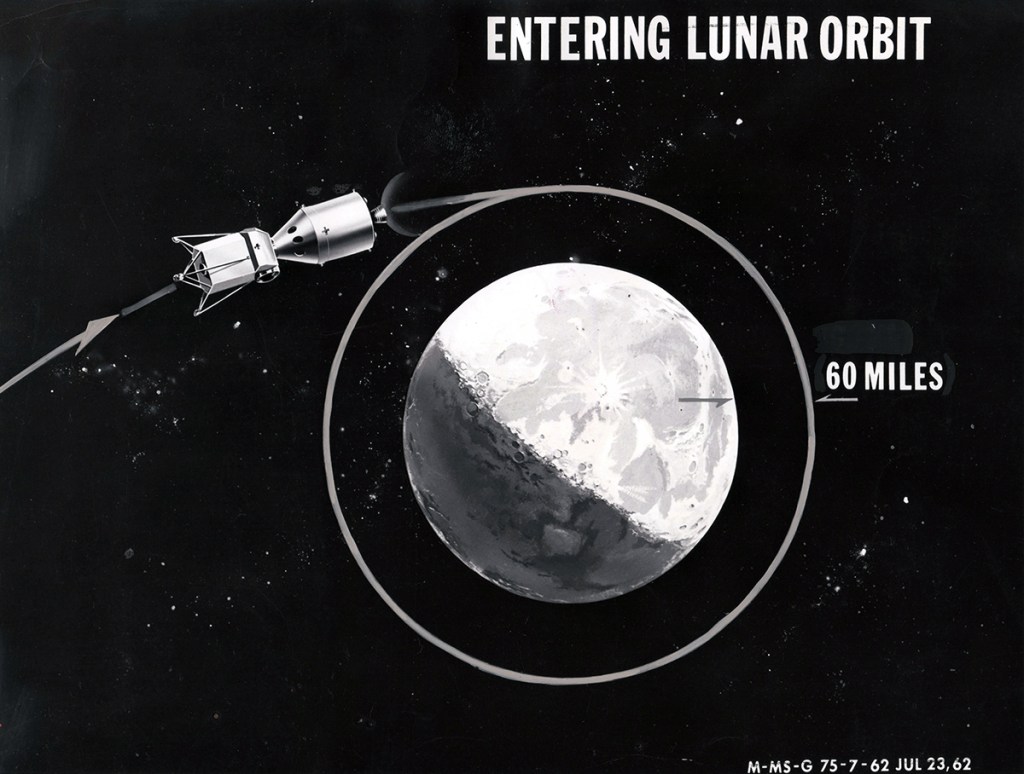
We Land On The Moon

NASA artwork as it appeared in We Land On The Moon by John Raymond in 1963.

see also:

Beautiful scan of an original NASA issued lithograph.

and also:

Image credit: NASA
Image source: Mike Acs, Drew Granston, Numbers Station

Apollo 17 Experiments

Image credit: NASA
Image source: Numbers Station
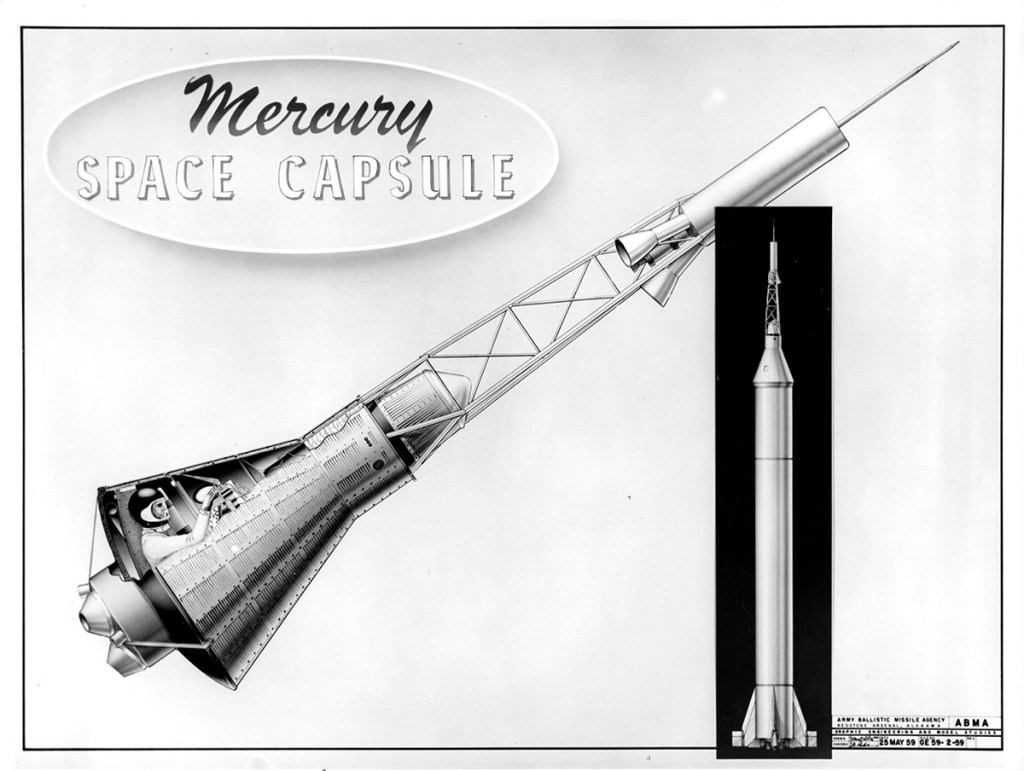
Mercury Space Capsule

Image credit: ABMA
Image source: Numbers Station
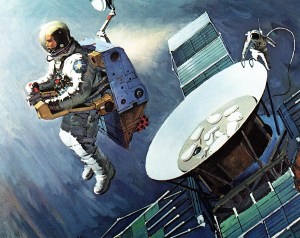
Worden’s EVA

see also:

It took me a few, but the lower version is either an earlier or later version of the same painting. The figure representing James B. Irwin is a repaint. My guess is the image on NASA’s site is later, reworked to give the figure a slightly more dramatic pose. The painting is by a North American Rockwell artist.

Image credit: NASA JSC
Images: NASA Images, Numbers Station

By Jove!

Jupiter Lunar Landing

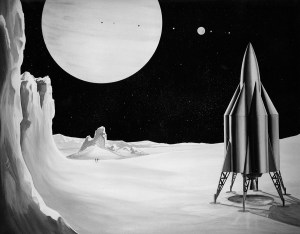
From one of Jupiter’s 12 moons, earth astronauts gaze on this impressive, but bleak, view of the 86,900 mile-diameter planet. More than 316 times the mass of the Earth, Jupiter is seven times further from the sun than Earth; would require voyage of one to two months to reach at velocity of one million feet per second. Max Hunter, Douglas Aircraft Company engineer predicts economically feasible trips to Jupiter will be made through development of nuclear thrust spaceship engines. 

Douglas Aircraft Company, Inc. General Offices, Santa Monica, Calif.

Image credit: Douglas Aircraft Company
Image source: Numbers Station
Inside Deimos

ROMBUS

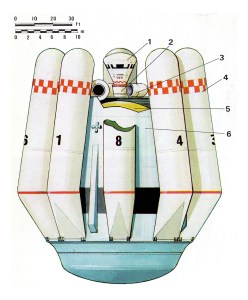
Configuration for a manned Mars mission (Project Deimos).

  1. Six man Mars landing capsule;
  2. Pressurized tunnel;
  3. Toroidal living compartment;
  4. Liquid hydrogen tanks (8);
  5. Spherical liquid oxygen tank
  6. Booster centerbody.

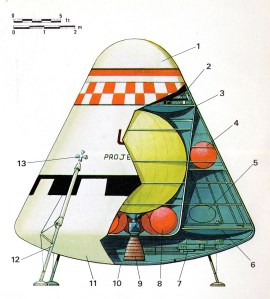
Project Deimos – Mars Landing Module

  1. Earth-return capsule;
  2. Command centre and pressurized tunnel;
  3. Separation joint, for return to Mars orbit;
  4. Mars landing propellant tanks(6);
  5. Ground access hatch;
  6. Mars-launch platform;
  7. Payload and power supply equipment compartment;
  8. Mars-launch propellant tank;
  9. Landing and take-off rocket motor;
  10. Jettisonable closure panel;
  11. Mars-entry heat shield;
  12. Extensible landing gear(4);
  13. Altitude-control system quads (4).

Frontiers of Space
Philip Bono & Kenneth Gatland
Macmillan, 1969

Image credit: Douglas
Image source: Numbers Station