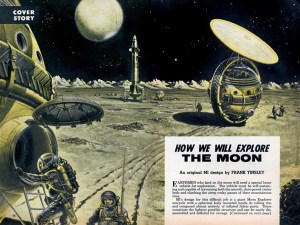
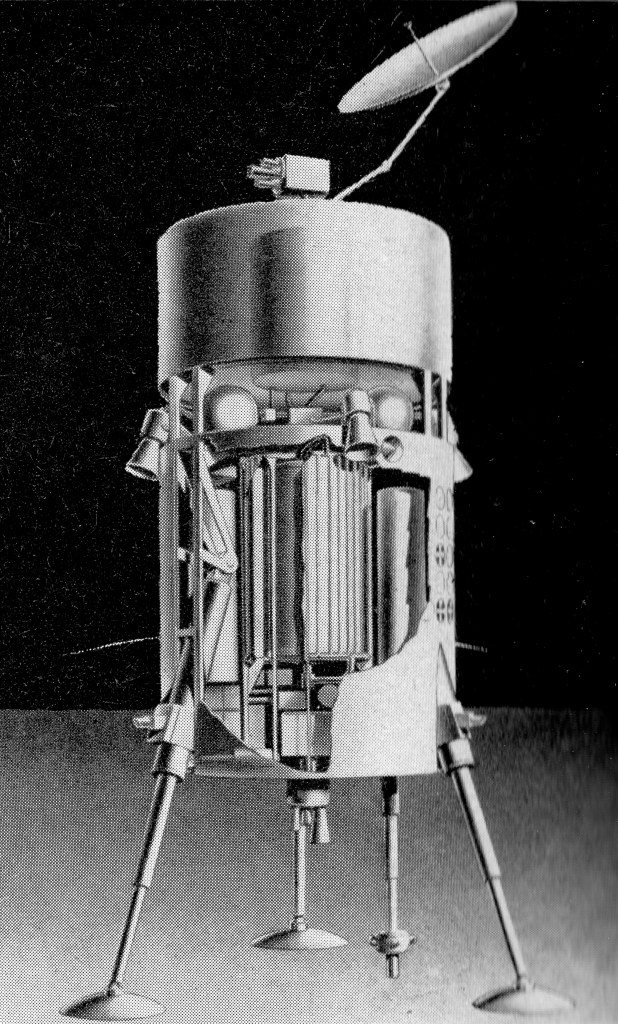
Hawker Siddeley Moonbase

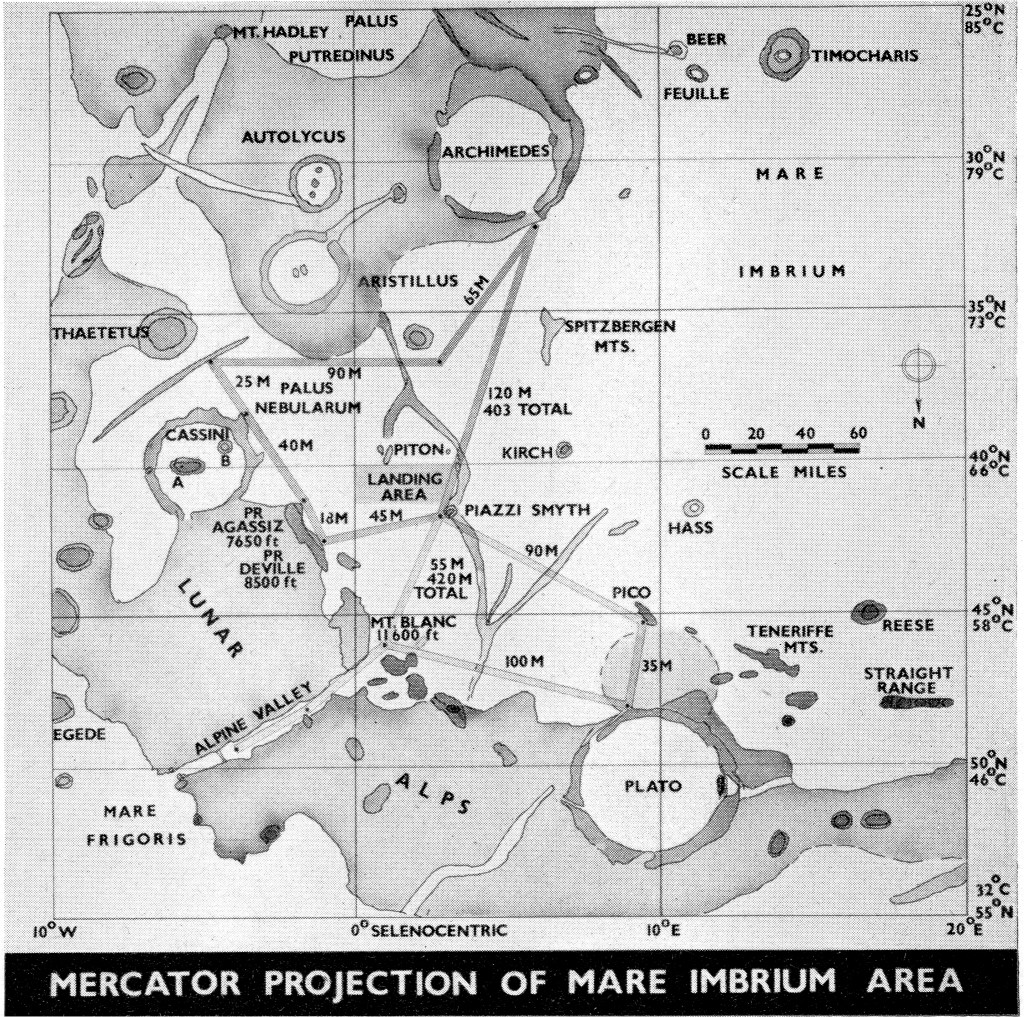
A landing area in the south-western corner of the great Mare Imbrium is suggested for the first expedition because of the wealth of interesting places to explore in that vicinity, the reasonable surface temperature and a surface less rough than that of the southern hemisphere.
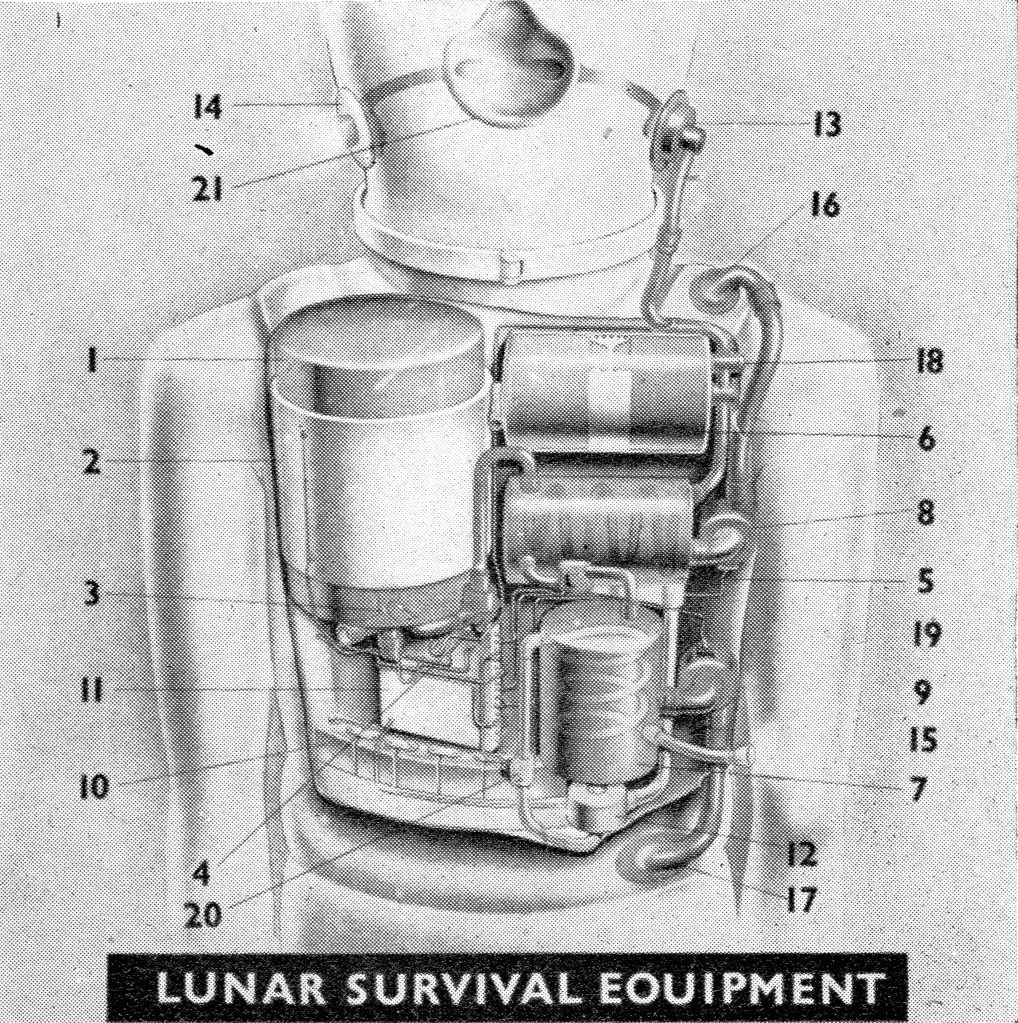
Back-Pack suggested for use by Moon explorers. Main items include an oxygen container (1) heated by an electric jacket (2), a battery pack (10), a perspiration trap (12) and a ventilation system for the space suit, with coolant gas entry and exit at 16 and 17.
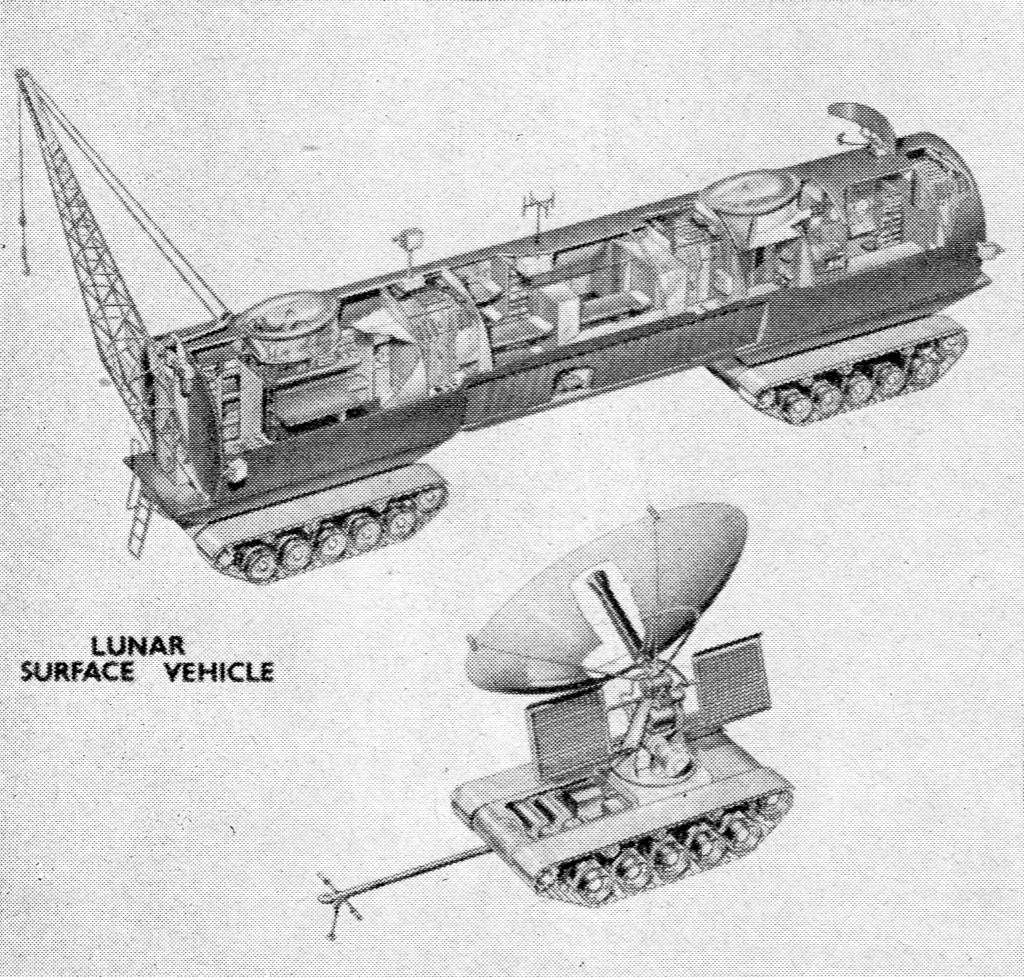
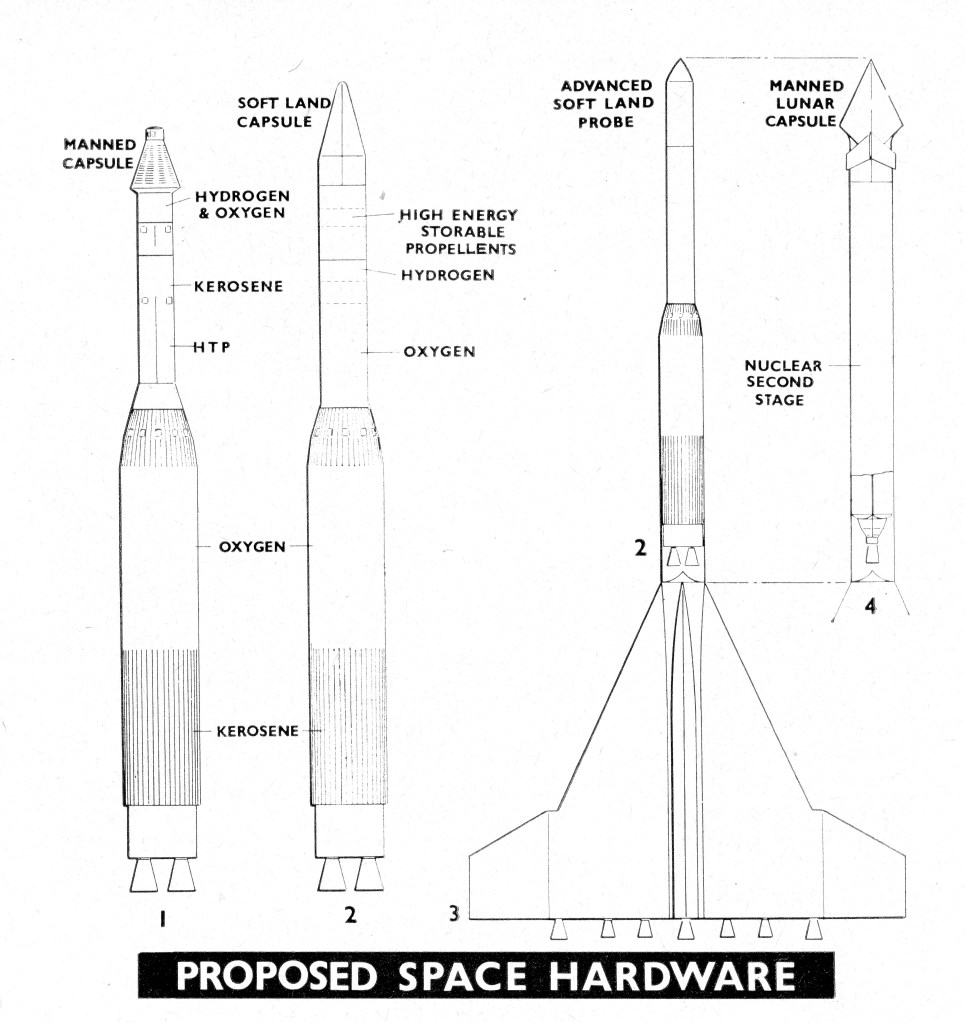
The whole party would return to Earth in the capsules used to land on the Moon. These would employ a similar re-entry technique to that used by the Dyna-Soar winged orbital vehicle.

Eagle Book of Rockets and Space
by John W.R. Taylor and Maurice Allward
Longacre Press, 1961

Image credit: Hawker Siddeley
Image source: Numbers Station
Stowed Vent Array

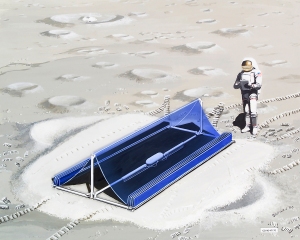
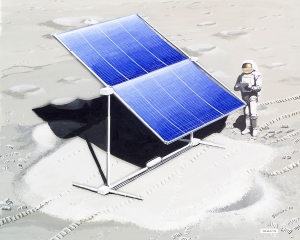
In this series by Lewis Research Center artist Les Bossinas, an astronaut demonstrates multi-purpose solar arrays. As it harnesses the power of the sun, the first can be configured as a wind-tunnel for protecting strawberries or used as a tent for children’s garden parties. The second model can be used as a balance beam for gymnastics, a ping pong table, or folded up to create a porch screen. Just the thing for an evening cocktail while watching the sunset.

Image credit: NASA LRC
Image source: DVIDS

Moving The Playhouse

Or, “Articulated Lunar Rover Lunar Excavator.”

Image credit: NASA LRC
Image source: DVIDS

Lunar Commuter Shuttle

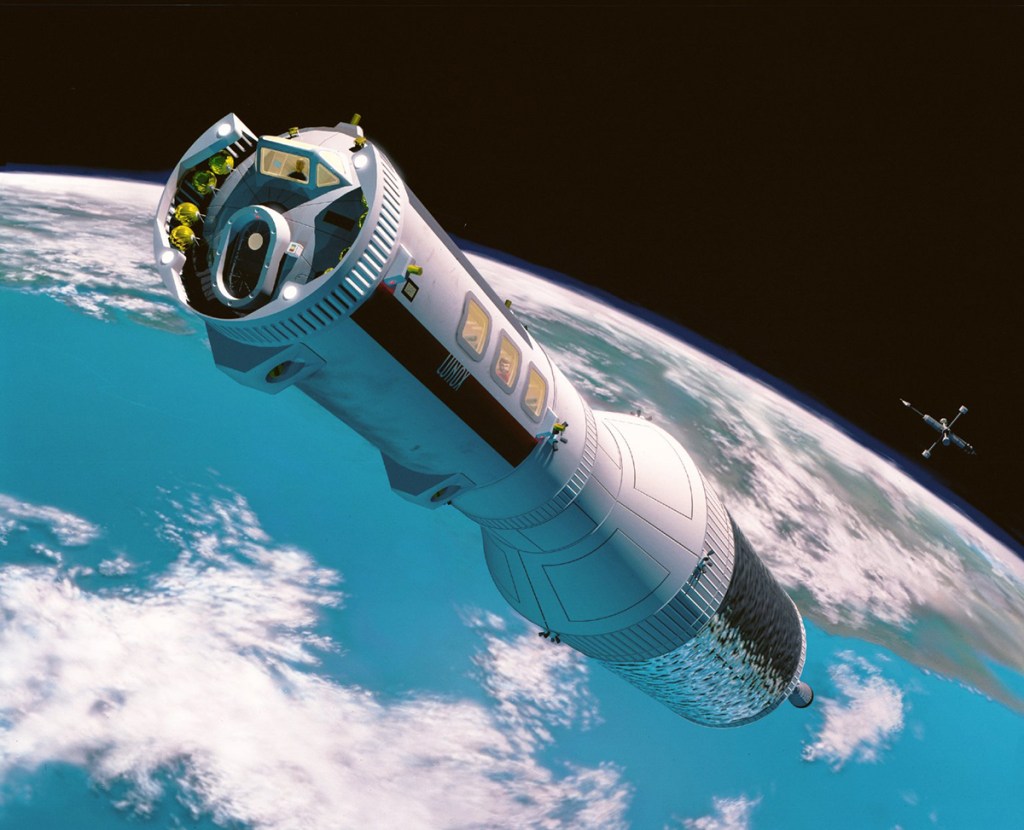
S99-04186 (1996) — Routine 24-hour flights to the Moon could employ detachable crew modules atop nuclear thermal transfer vehicles. By transferring the module from one propulsion element to the next, the passengers could complete their trip to the lunar surface without ever leaving the module. This image produced for NASA by Pat Rawlings and Bill Gleason, (SAIC). Technical concepts for NASA’s Exploration Office, Johnson Space Center (JSC).

Image credit: NASA LRC
Image source: Internet Archive

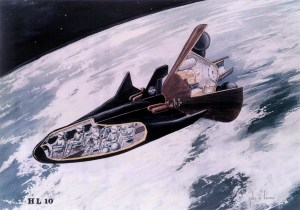
HL 10

Image credit: Boeing
Image source: NM Space Museum

Selena Storyboard

How re-usable ROMBUS-type launch vehicles can be applied to construction of a temporary lunar base (Project Selena).

  1. Vehicle en route for the Moon is refuelled in Earth Orbit;
  2. Soft-lands on the Moon with lunar base components;
  3. Pressurized moon-tractor hauls hydrogen tanks adapted for human habitation to assembly site;
  4. The lunar base is ready for occupation.

Frontiers of Space is peppered with artwork from Douglas, including paintings by Don Charles and James Finnell. In the book, this section was illustrated with (pretty poor) knock-offs. Why? Who knows? These were the masters.

Image credit: Douglas
Image source: SDASM Archives