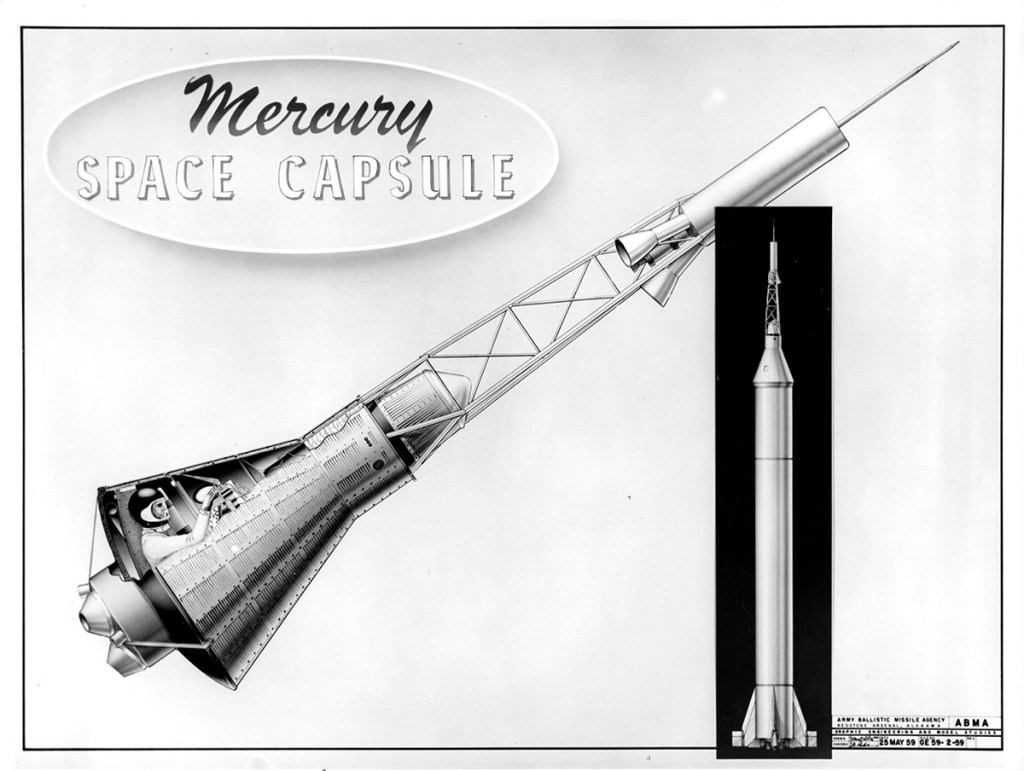
Image credit: ABMA
Image source: Numbers Station
Image credit: ABMA
Image source: Numbers Station
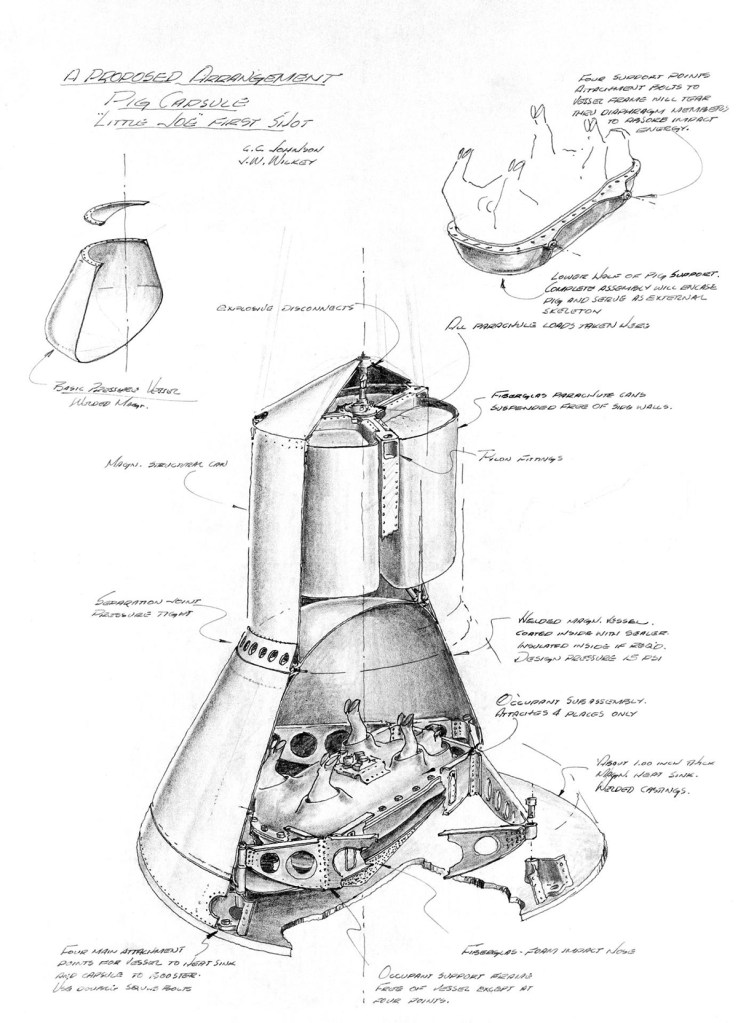
Image credit: NASA
Image source: NASA JSC
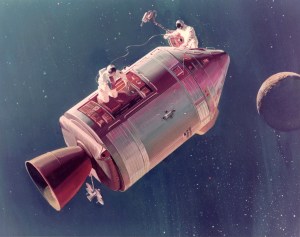
Image credit: NASA
Image source: Mike Acs

see also:
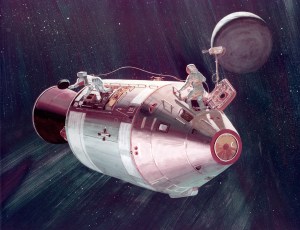
It took me a few, but the lower version is either an earlier or later version of the same painting. The figure representing James B. Irwin is a repaint. My guess is the image on NASA’s site is later, reworked to give the figure a slightly more dramatic pose. The painting is by a North American Rockwell artist.
Image credit: NASA JSC
Images: NASA Images, Numbers Station
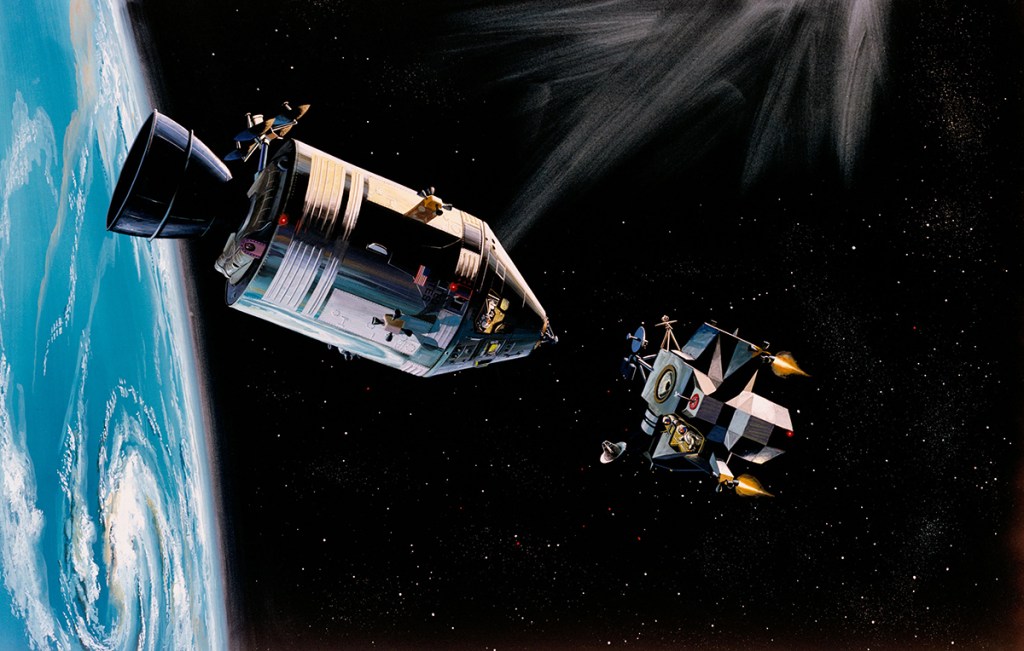
S69-18546 (February 1969) — North American Rockwell artist’s concept illustrating the docking of the Lunar Module ascent stage with the Command and Service Modules during the Apollo 9 mission. The two figures in the Lunar Module represent astronauts James A. McDivitt, Apollo 9 commander; and Russell L. Schweickart, lunar module pilot. The figure in the Command Module represents astronaut David R. Scott, command module pilot. The Apollo 9 mission will evaluate spacecraft lunar module systems performance during manned Earth-orbital flight.
Image credit: NASA JSC
Image source: NASA Images

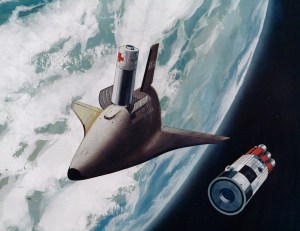
Image credit: McDonnell Douglas
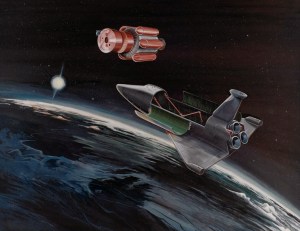
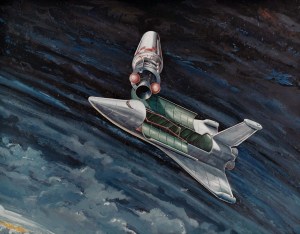
Image credit: McDonnell Douglas
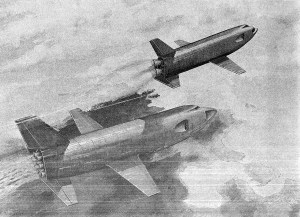
Image credit: McDonnell Douglas
File source: NASA NTRS
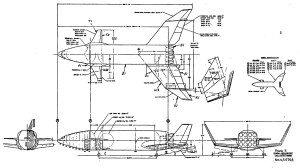
Imaged credit: NASA
File source: NASA NTRS
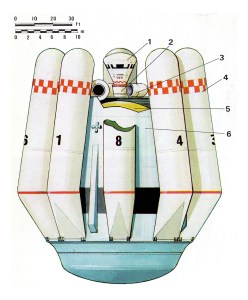
ROMBUS
Configuration for a manned Mars mission (Project Deimos).
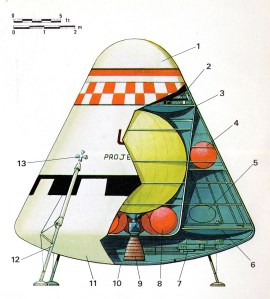
Project Deimos – Mars Landing Module
Frontiers of Space
Philip Bono & Kenneth Gatland
Macmillan, 1969
Image credit: Douglas
Image source: Numbers Station
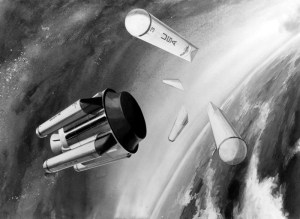
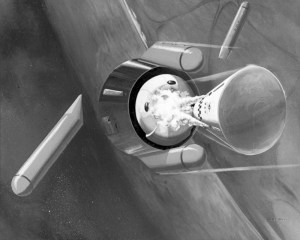
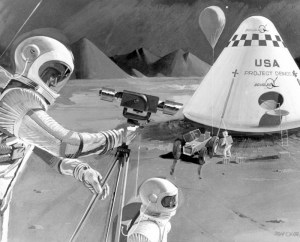
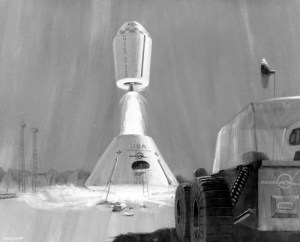
Mission to Mars (Project Deimos)
Frontiers of Space
Philip Bono & Kenneth Gatland
Macmillan, 1969
Image credit: Douglas
Image source: SDASM Archives
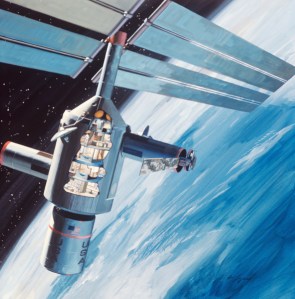
Image credit: North American Rockwell
Image source: Numbers Station
