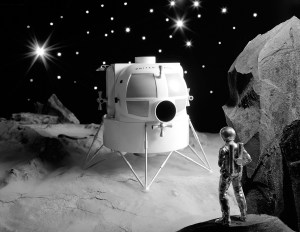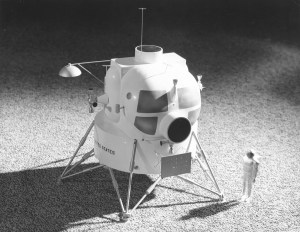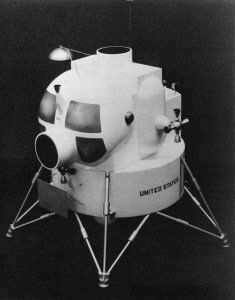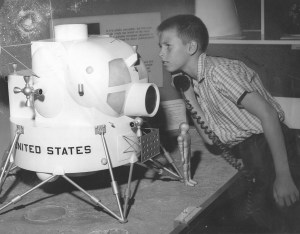
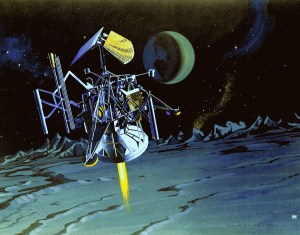
1962 Boeing LEM

Image credit: North American
Image source: Paul Carsola
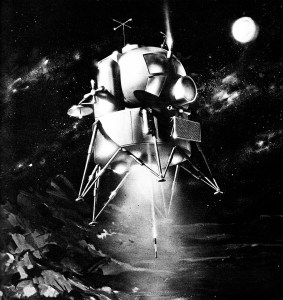
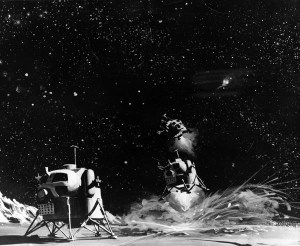
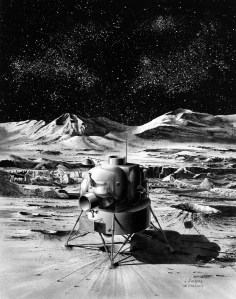
Landing Sequence

Image credit: North American
Image source: Mike Acs

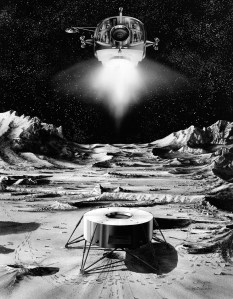
Lunar Liftoff

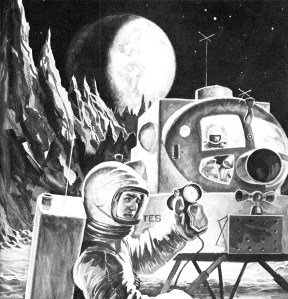
  1. Mariner IV determined that Mars’ atmosphere is only 1 to 2 percent of the Earth’s in density. This may mean that future manned spacecraft to Mars must employ the same landing technique – retro rockets – as the ones which will be used by the Apollo lunar ship.
  2. Artist’s drawing of interplanetary explorers maintaining contact through the use of small radio equipment. This particular transmitter is also designed to transmit data concerning the condition of the astronaut and the functioning of his suit.

Mars: Planet for Conquest
by Erik Bergaust
G.P Putnam’s Sons, 1967

Image source: Numbers Station
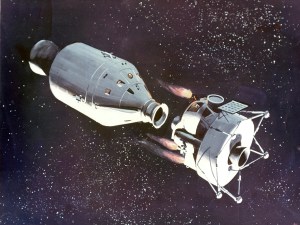
LEM by Gary Meyer

Image credit: NASA
Image source: Mike Acs

Ascent Stage

Image credit: NASA
Image source: Mike Acs

Źiemba and Collopy

Image credit: NASA
Image source: Mike Acs

Lunar Liftoff

Space World, November 1964

Image credit: Bell Aerosystems
Image source: Numbers Station

All-Purpose Space Vehicle

  1. All-purpose space vehicle proposed by Douglas Missile & Space Systems Division engineer Phil Bono, is pictured in artist’s concept during refueling in earth orbit prior to flight to the moon.
  2. Refueling tankers, on either side will return to earth. Vehicle carries up to eight “strap-on” liquid hydrogen tanks, which can be ejected after they are emptied or retained for use on moon. Retro engines are fire as spacecraft nears lunar surface to allow a direct landing without an orbital maneuver. All-purpose space vehicle proposed by Douglas Missile & Space Systems Division engineer Phil Bono, is pictured in artist’s concept during refueling in earth orbit prior to flight to the moon.
  3. Empty strap-on tanks are lowered to lunar surface before each return flight.
  4. These liquid hydrogen tanks could be used as shelter for pioneering lunar colony.

Space World
December 1964, VOL. A-14

Image credit: Douglas
Image source: Numbers Station