Image credit: NASA
Image source: SDASM Archives
Image credit: NASA
Image source: SDASM Archives
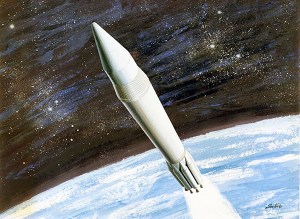
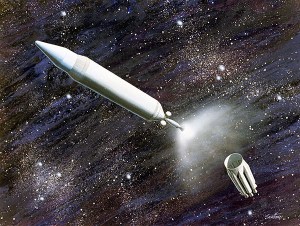
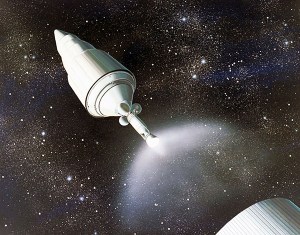
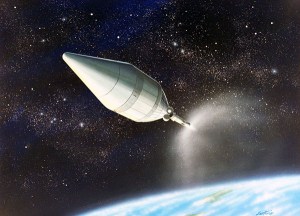
Image credit: Convair
Image source: SDASM Archives
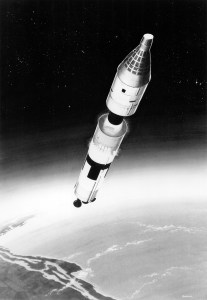
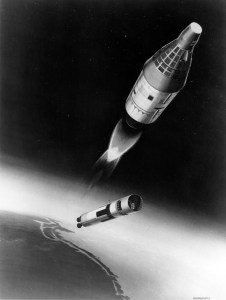
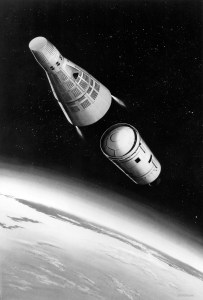
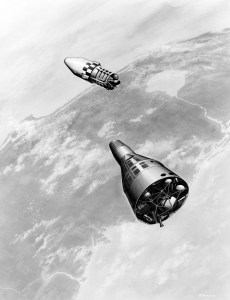
Image credit: Martin
Image source: Ed Dempsey

B&W (As seen in Roundup dated Nov. 24, 1967)
NOV. 67 S-67-51373
MANNED SPACE CENTER, HOUSTON, TEXAS
ORBITAL WORKSHOP — Artist’s concept showing how a Saturn S-IVB stage will appear when converted to the Apollo Applications Orbital Workshop. Launched fully fueled with airlock and docking adaptor attached, the S-IVB’s liquid hydrogen tank becomes a shirtsleeve environment workshop after the fuel has been depleted. At left is an Apollo Command and Service Module launched separately and docked into one of the docking adaptor’s ports. The Apollo Telescope Mount is shown docked into one of the side ports. The ATM will be joined to the cluster in a second phase of the program. Solar cell “wings” to provide power fold outward from the S-IVB after orbit is achieved. McDonnell Douglas Corporation’s Missile and Space Systems Division is making the S-IVB orbital workshop modifications under contract to NASA Marshall Space Flight Center and McDonnell Astronautics Company is developing the airlock under contract to MSC. (MCDONNELL DOUGLAS PHOTOGRAPH)
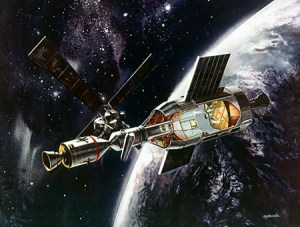
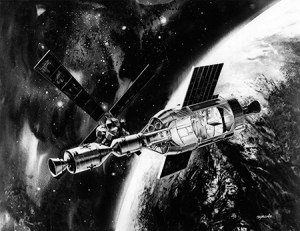
Look closely and you’ll notice subtle differences between this version of the painting and a colour rendering found in the SDASM Archives I’ve shared before.
If you’re interested in seeing more of Jacobe’s work, his artwork for the Douglas MOL can be found here. The images are small and plastered with watermarks, so it’s a bit of a tease but they are beautiful.
Image credit: NASA
Image source: Numbers Station
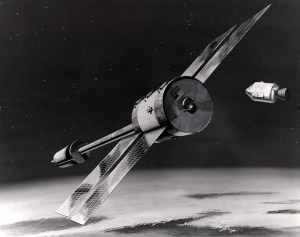
Image credit: North American Rockwell
Images: NASA, Mike Acs
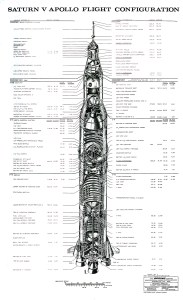
The Saturn V configuration is shown in inches and meters as illustrated by the Boeing Company. The Saturn V vehicle consisted of three stages: the S-IC (first) stage powered by five F-1 engines, the S-II (second) stage powered by five J-2 engines, the S-IVB (third) stage powered by one J-2 engine. A top for the first three stages was designed to contain the instrument unit, the guidance system, the Apollo spacecraft, and the escape system. The Apollo spacecraft consisted of the lunar module, the service module, and the command module. The Saturn V was designed perform lunar and planetary missions and it was capable of placing 280,000 pounds into Earth orbit.
Image credit: NASA MSFC
Image source: NASA Images
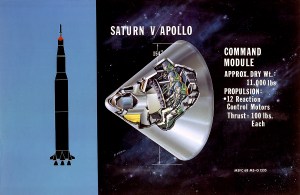
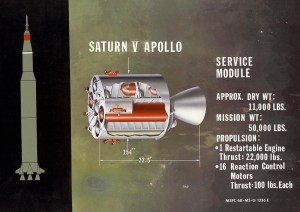
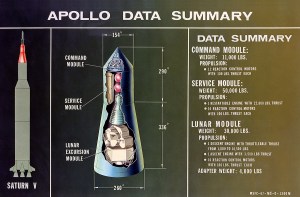
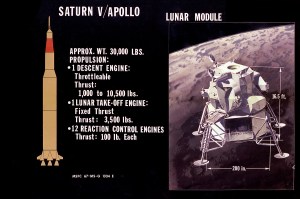
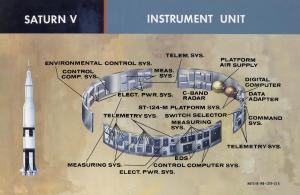
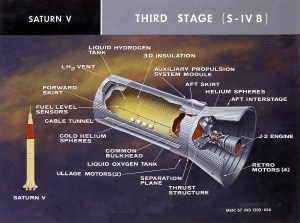
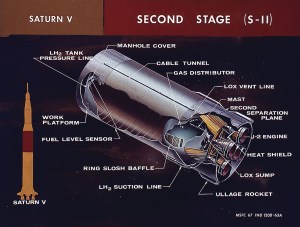
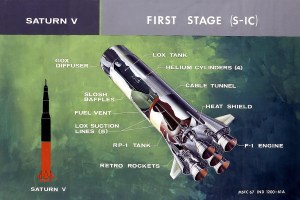
Image credit: NASA MSFC
Image source: NASA Images
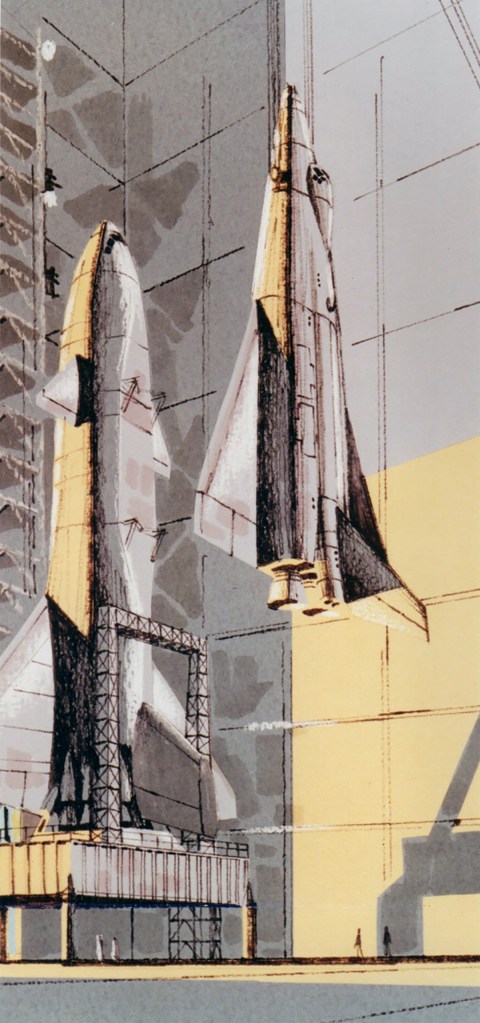
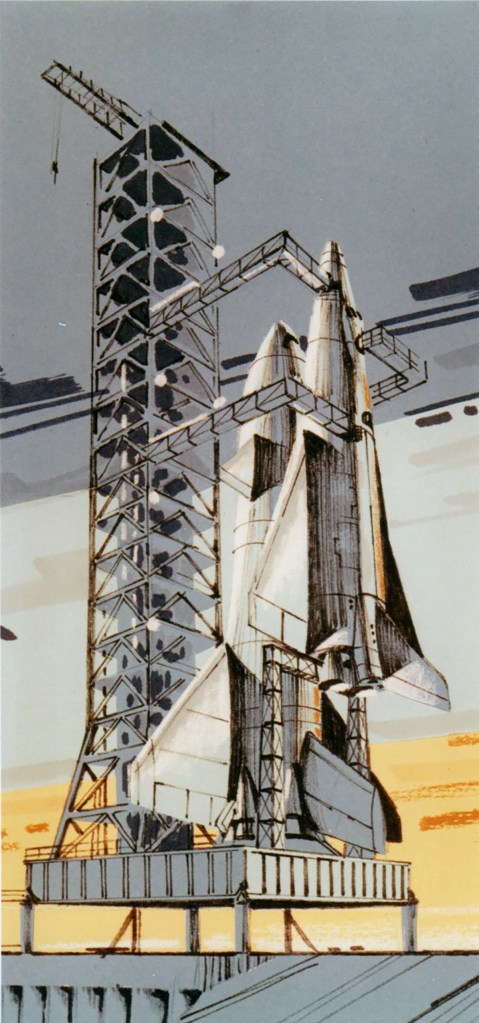
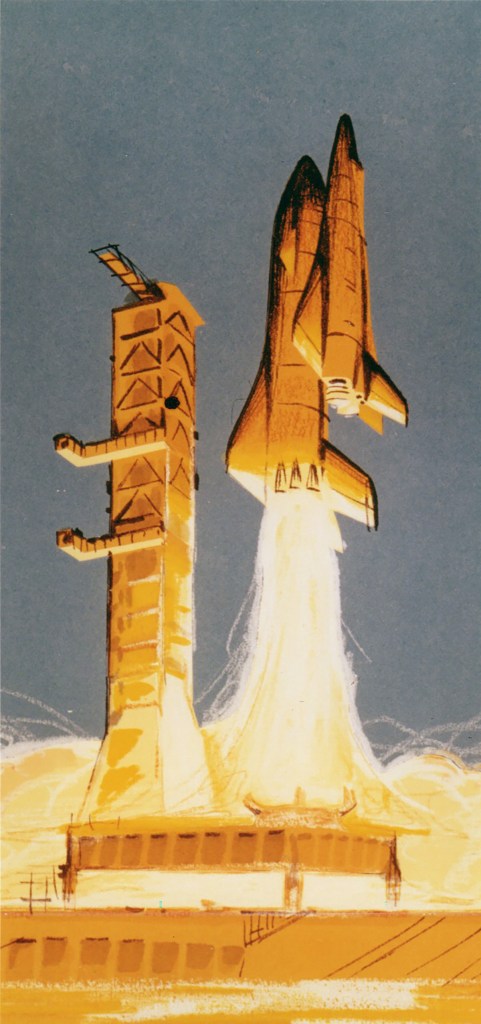
Image credit: North American Rockwell
Image source: Numbers Station
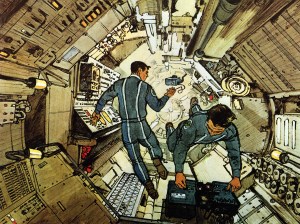
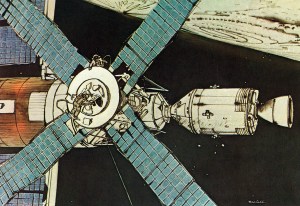
Our World in Space
Robert McCall & Isaac Asimov
New York Graphic Society, 1974
Image credit: NASA
Image source: Numbers Station
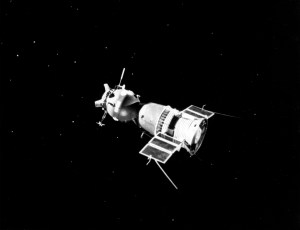
DECEMBER 1974
MOSCOW, UNION OF SOVIET SOCIALIST REPUBLICS
SOYUZ 16 CONCEPT —- An artist’s concept depicting the Soviet Soyuz 16 spacecraft in Earth orbit. The six-day Soyuz 16 Earth-orbital mission flown December 2-8, 1974, was a Soviet rehearsal for the joint U.S.-USSR Apollo-Soyuz Test Project. The crew of Soyuz 16 was Cosmonauts Anatolly V. Filipophenko, commander; and Hikolay H. Rukavishnikov, engineer. These two me are the Soviet ASTP second (back-up) crew, also. The three major components of the Soyuz spacecraft are the sphere-shaped orbital module, the decent vehicle (in center), and the instrument assembly module. Two solar panels extend out from the IA module. A docking mechanism to test the Soviet ASTP androgenous docking system (seen attached to the orbital module) was flown on the Soyuz 16 flight. This picture was made from a frame of 35mm motion picture film.
PHOTO COURTESY: USSR ACADEMY OF SCIENCES
PHOTO CREDIT: NASA or National Aeronautics and Space Administration
Image credit: NASA
Image source: Numbers Station