Image credit: Grumman
Image source: Mike Acs
Image credit: USAF
Image source: AFMC
Image credit: Goodyear Aerospace
Image source: AFMC
Image credit: Boeing
Image source: National Archives
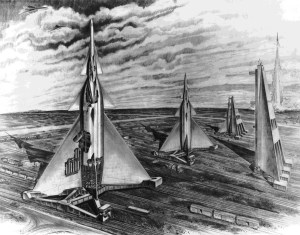
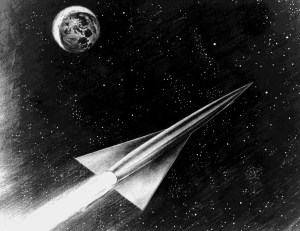
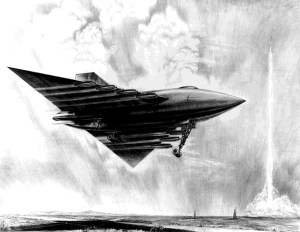
Image credit: Goodyear Aerospace
Image source: AFMC
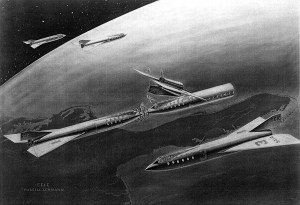
Image credit: Goodyear Aerospace
Image source: AFMC
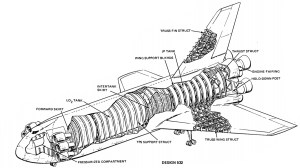
Image credit: Grumman
File source: NASA NTRS
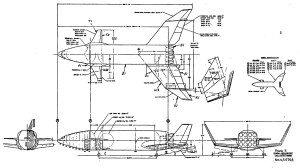
Imaged credit: NASA
File source: NASA NTRS
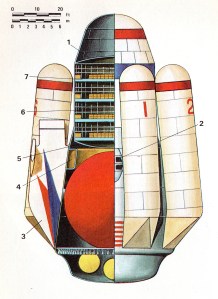
Pegasus Intercontinental Passenger Rocket
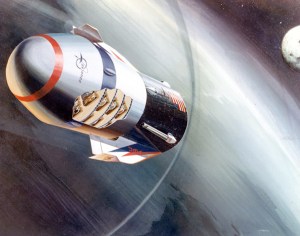
Pegasus during atmospheric re-entry uses the LH2-cooled plug nozzle as a heat shield. The ballistic transport would convey 172 passengers and freight 7,456 miles (12,000 km.) in 39 min. without exceeding an acceleration of 3g during ascent or re-entry. At the arrival spaceport it would hover on rocket thrust during a soft landing in the vertical attitude.

Pegasus Passenger Compartment
Frontiers of Space
Philip Bono & Kenneth Gatland
Macmillan, 1969
Image credit: Douglas / Blandford Press
Images: Numbers Station, SDASM Archives