Image credit: NASA Johnson
Image source: NASA Images
Image credit: NASA Johnson
Image source: NASA Images
Space World
November 1964, VOL. A-13
Image credit: Douglas
Image source: SDASM Archives

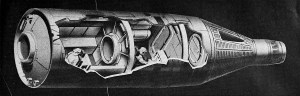
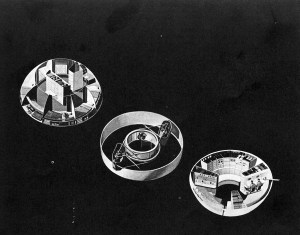
A manned orbital space space laboratory would be able to operate for several months without resupply. Basic Garrett-AiResearch systems could be slightly modified to meet requirements for environmental control, life support, cryogenic storage, power and attitude control for both the command module and laboratory.
Space World
December 1964, VOL. A-14
Image credit: Garrett-AiResearch
Image source: Numbers Station
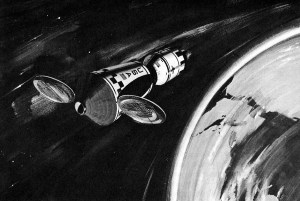
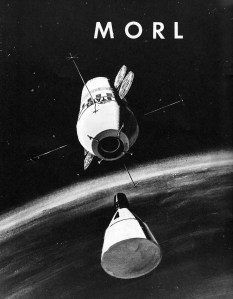
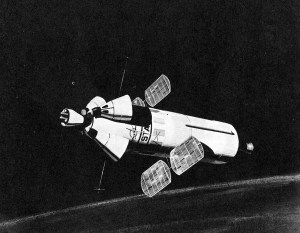
Medium-sized orbiting lab is this Manned Orbital Research Laboratory (MORL) developed for NASA’s Langley Lab by Douglas Missiles & Spacecraft Division. The lab which weighs about 35,000 pounds, could maintain 3 to 6 men in orbit for a year.
Orbiting Stations: Stopovers to Space Travel
Irwin Stambler
G.P. Putnam’s Sons, 1965
Image credit: Douglas
Image source: SDASM Archives
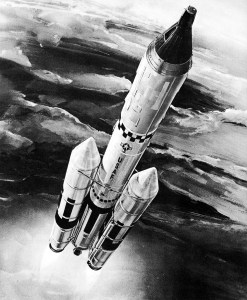
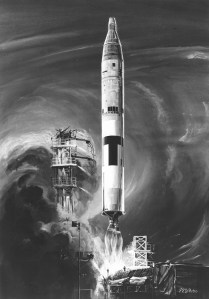
The MOL – Manned Orbiting Laboratory – is shown, in this artist’s view, being lifted into space by the Titan III C. On top of the cylindrical canister, the crew sit in a modified Gemini capsule.
Orbiting Stations: Stopovers to Space Travel
Irwin Stambler
G.P. Putnam’s Sons, 1965
Image credit: USAF
Image source: Numbers Station
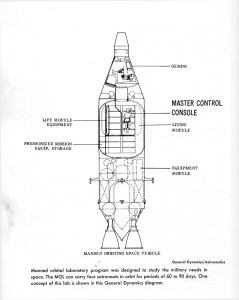
Orbiting Stations: Stopovers to Space Travel
Irwin Stambler
G.P. Putnam’s Sons, 1965
Image credit: McDonnell
Image source: Numbers Station
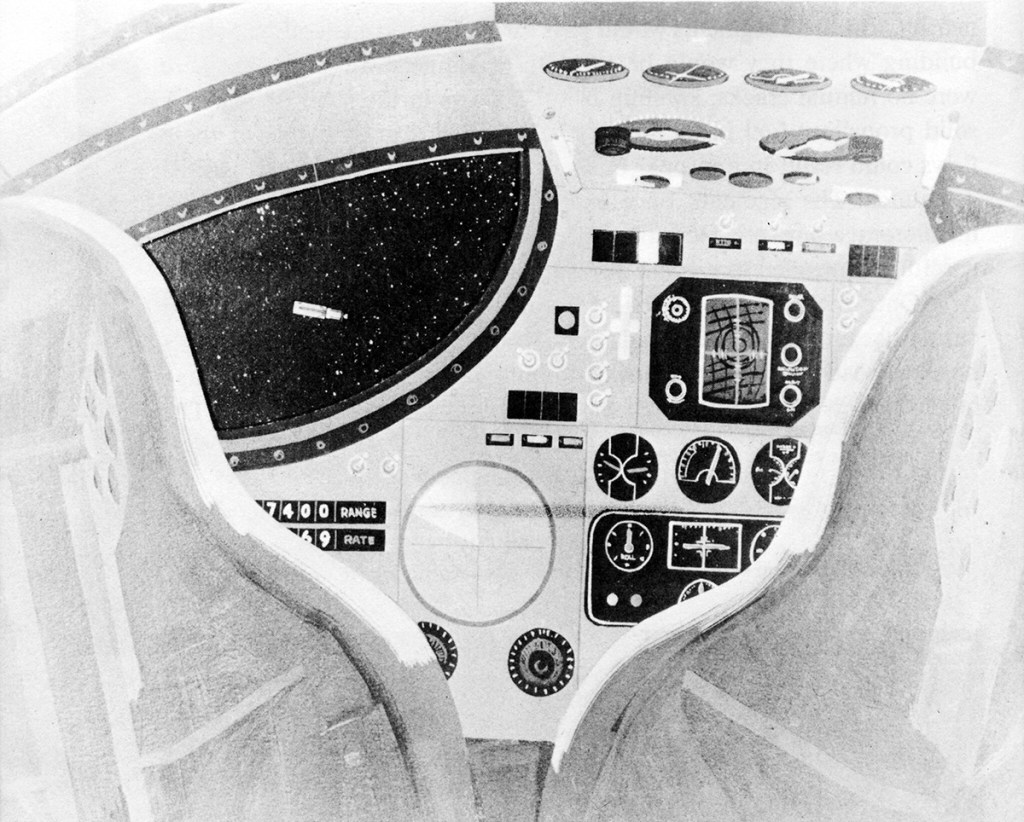
Carefully watching the displays on their instrument panel, two astronauts in their Gemini ferry prepare to rendezvous with the MOL.
Orbiting Stations: Stopovers to Space Travel
Irwin Stambler
G.P. Putnam’s Sons, 1965
Image credit: USAF
Image source: Numbers Station
Image credit: NASA
Image source: National Archives
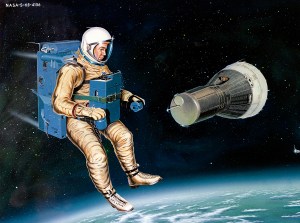
Image credit: NASA
Image source: Internet Archive