Image credit: NASA
Image source: Mike Acs
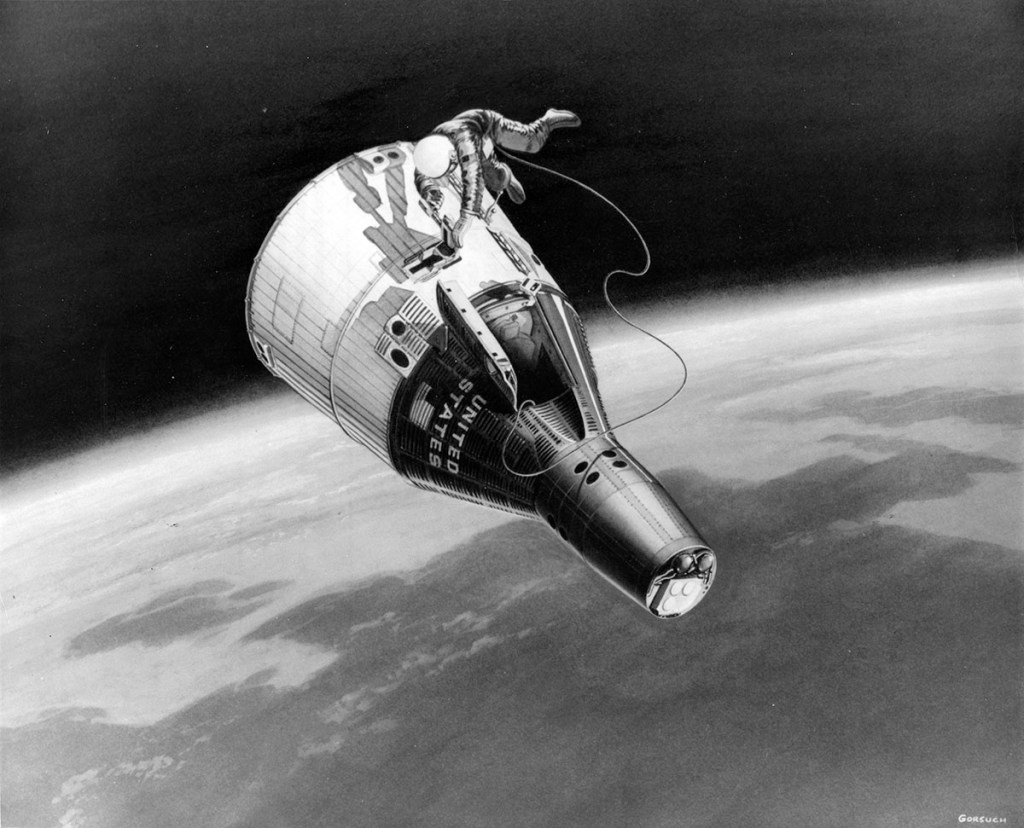
Image credit: McDonnell
Image source: Mike Acs
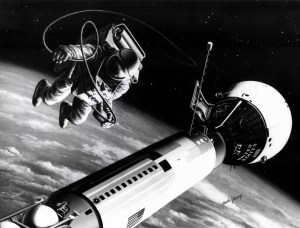
Image credit: NASA
Image source: NM Space Museum
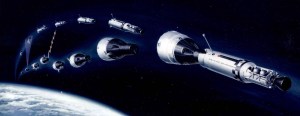
Image credit: NASA
Image source: NM Space Museum
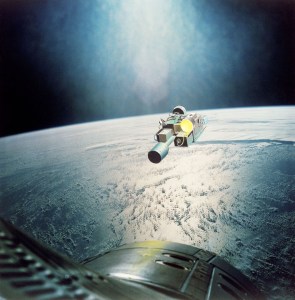
S65-28653 (August 1965) — Rendezvous Evaluation Pod (REP) in orbit is approached by Gemini spacecraft as seen in this artist’s concept using an actual photograph taken on the Gemini-4 mission. The REP is superimposed over a Gemini-4 Earth-sky picture of cloud formations over an ocean. The REP will be used by the crew of the Gemini-5 spacecraft to practice rendezvous techniques.
Image credit: NASA JSC
Image source: NASA Images
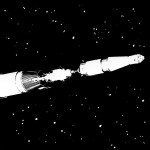
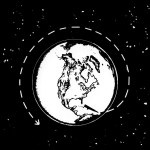
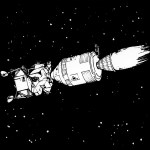
Top Left: Flight Crew Preparation
Top Right: Orbital Insertion
Middle Left: 103 N. Mile Orbit
Middle Right: Separation
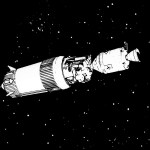
Bottom Left: Docking
Bottom Right: Docked SPS Burn
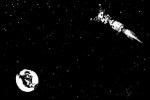
Top Left: Landmark Tracking
Top Right: Pitch Maneuver
Bottom Left: Yaw-Roll Maneuver
Bottom Right: High Apogee Orbits
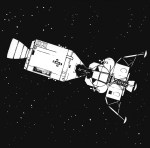
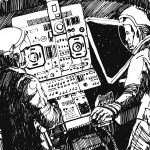
Left: Crew Transfer
Right: LM System Evaluation
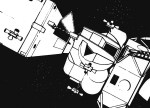
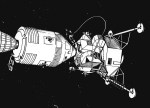
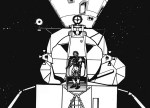

Top Left: Camera
Top Right: Day-Night EVA
Bottom Left: Golden Slippers
Bottom Right: TV – Texas, Florida
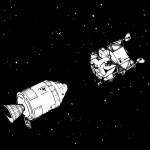
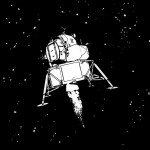
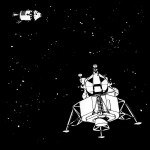
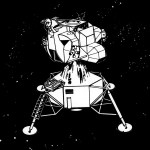
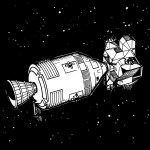
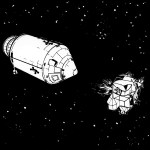
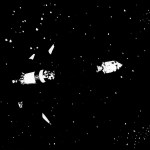
Top Left: Vehicles Undocked
Top Right: Burns For Rendezvous
Middle Left: Maximum Separation
Middle Right: APS Burn
Bottom Left: Formation Flying And Docking
Bottom Right: LM Jettison Ascent Burn
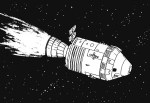
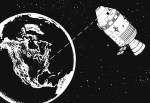
Left: Service Propulsion Burns
Right: Landmark Sightings, Photograph Special Tests
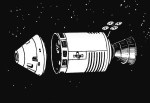
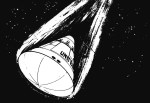
Top Left: CM/SM Separation
Top Right: Re-Entry
Image credit: NASA JSC
Images: NASA Images
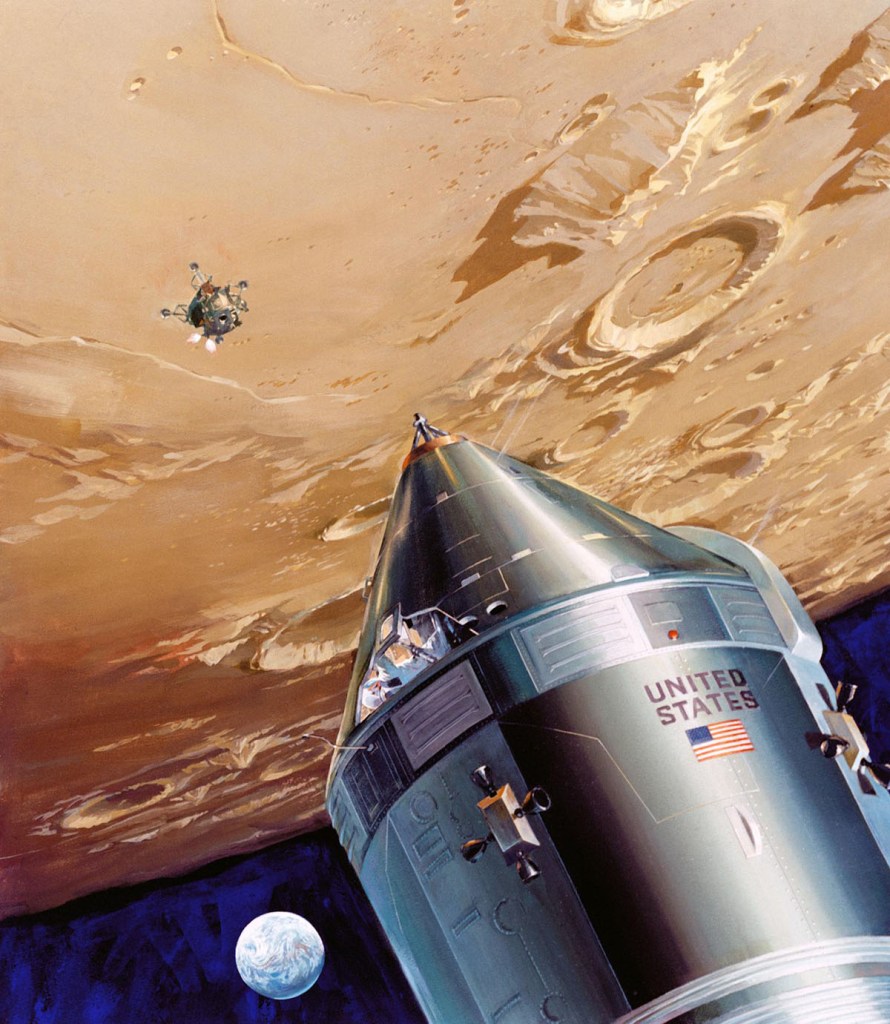
Image credit: NASA JSC
Image source: NASA Images
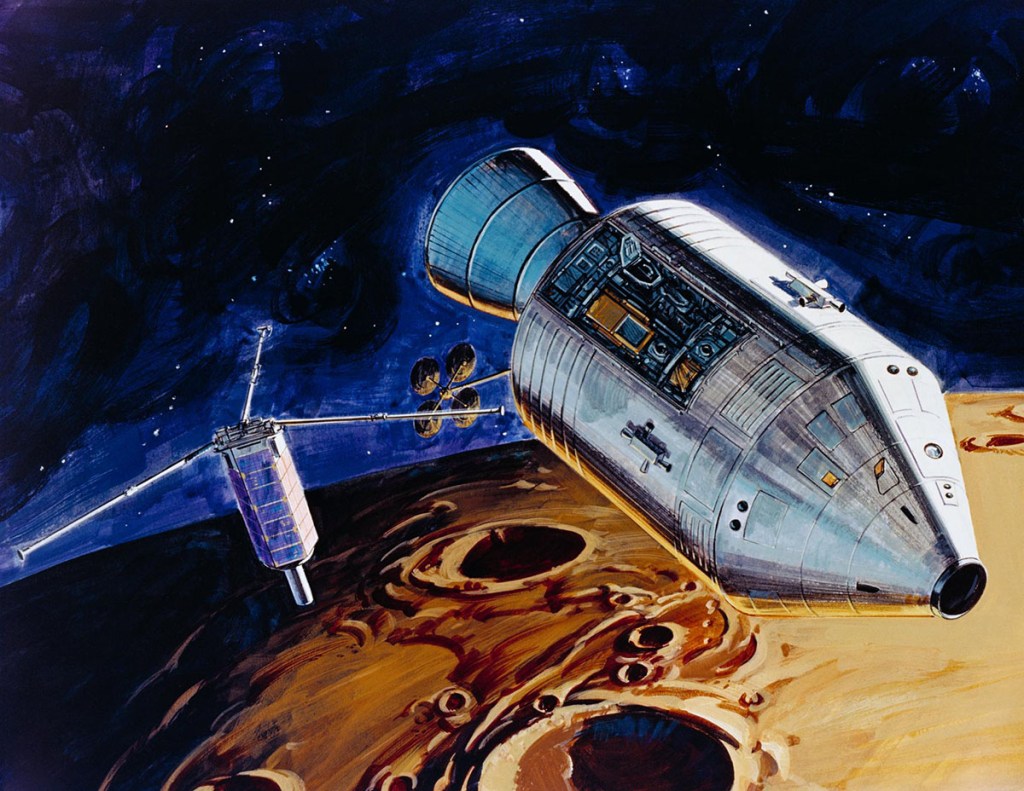
S71-39481 (July 1971) — An artist’s concept showing TRW’s small lunar subsatellite being ejected into lunar orbit from the SIM bay of the Apollo 15 Service Module. The 80-pound satellite will remain in orbit a year or more, carrying scientific experiments to study space in the vicinity of the moon. The satellite carries three experiments: S-Band Transponder; Particle Shadows/Boundary Layer Experiment; and Subsatellite Magnetometer Experiment. The subsatellite is housed in a container resembling a rural mailbox, and when deployed is spring-ejected out-of-plane at 4 fps with a spin rate of 140 rpm. After the satellite booms are deployed, the spin rate is stabilized at about 12 rpm. The subsatellite is 31 inches long and has a 14 inch hexagonal diameter. The exact weight is 78.5 pounds. The folded booms deploy to a length of five feet. Subsatellite electrical power is supplied by a solar cell array outputting 25 watts for dayside operation and a rechargeable silver-cadmium battery for nightside passes.
Image credit: NASA JSC
Image source: NASA Images
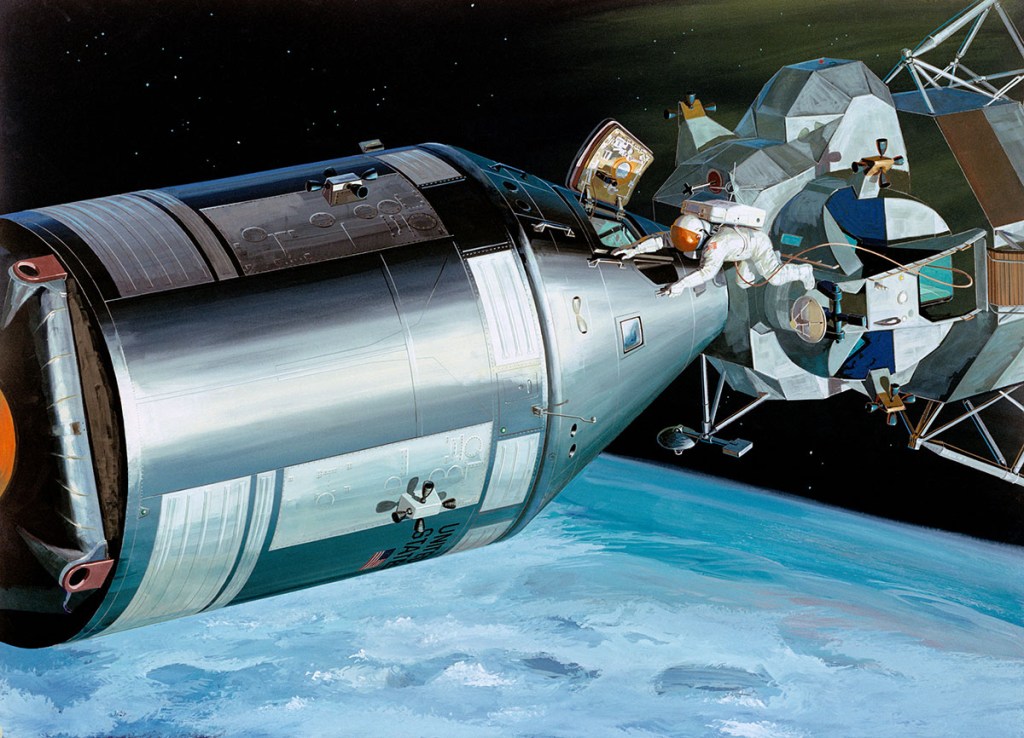
Image credit: NASA JSC
Image source: NASA Images
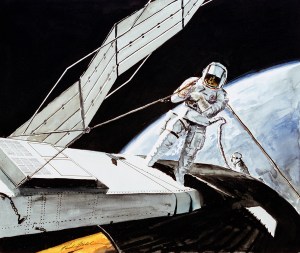
S73-27508 (6 June 1973) — An artist’s concept showing astronaut Charles Conrad Jr., Skylab 2 commander, attempting to free the solar array system wing on the Orbital Workshop during extravehicular activity at the Skylab 1 & 2 space station cluster in Earth orbit. The astronaut in the background is Joseph P. Kerwin, Skylab 2 science pilot. Here, Conrad is pushing up on the Beam Erection Tether (BET) to raise the stuck solar panel. The solar wing is only partially deployed; an aluminum strap is believed to be holding it down. Note the cut aluminum angle. Attach points for the BET are on the vent module of the solar array beam. The other end of the BET is attached to the “A” frame supporting the Apollo Telescope Mount (ATM) which is out of view. The aluminum strapping is to be out first, freeing the solar array beam. Then, if the beam does not automatically deploy, Conrad will attempt to help by pulling on the BET. The automatic openers may have become too cold to open without assistance. A deployed solar panel of the ATM is at upper left. The EVA is scheduled for Thursday, June 7th. This concept is by artist Paul Fjeld. Photo credit: NASA,br
Image credit: NASA Marshall
Image source: NASA Images