Image credit: Douglas
Image source: SDASM Archives
Image credit: Douglas
Image source: SDASM Archives
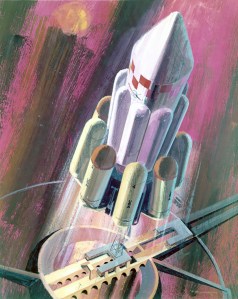
Image credit: Douglas
Image source: SDASM Archives
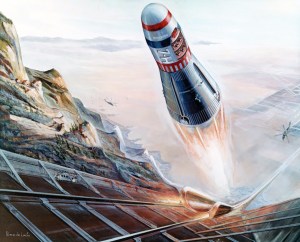
Image credit: Douglas
Image source: SDASM Archives
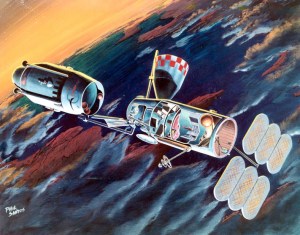
Image credit: Douglas
Image source: SDASM Archives
Image credit: Boeing
Image source: SDASM Commons
Image credit: Boeing
Image source: SDASM Archives
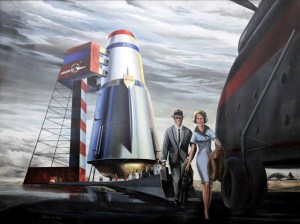
Image credit: Douglas
Image source: SDASM Archives


Space World
December 1964, VOL. A-14
Image credit: Douglas
Image source: Numbers Station
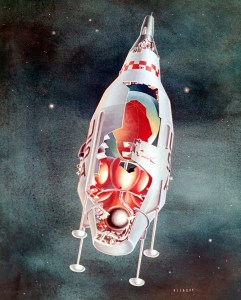
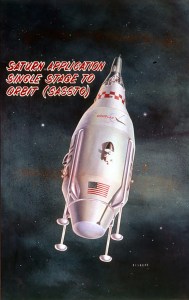
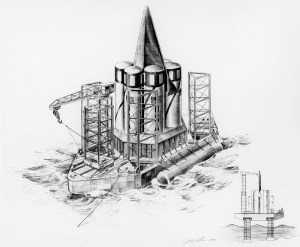
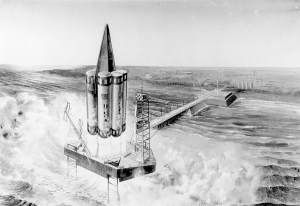
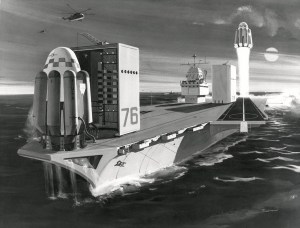
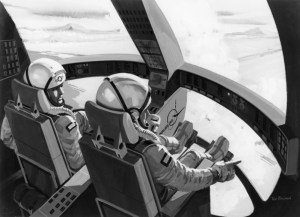
SASSTO (Saturn Application Single-Stage-to-Orbit) combined launch vehicle and spacecraft. Only 62.3 ft (19m.) tall, a single plug-nozzle engine would serve both as launch vehicle and for soft-landing back on Earth after an orbital mission. The craft – seen here with a Gemini two-man capsule – would be recovered intact and could be used repeatedly. It would be a particularly appropriate for ferry missions into Earth-orbit including the emergency rescue of astronauts.
Image credit: Douglas
Images: SDASM Archives