NAR Space Division

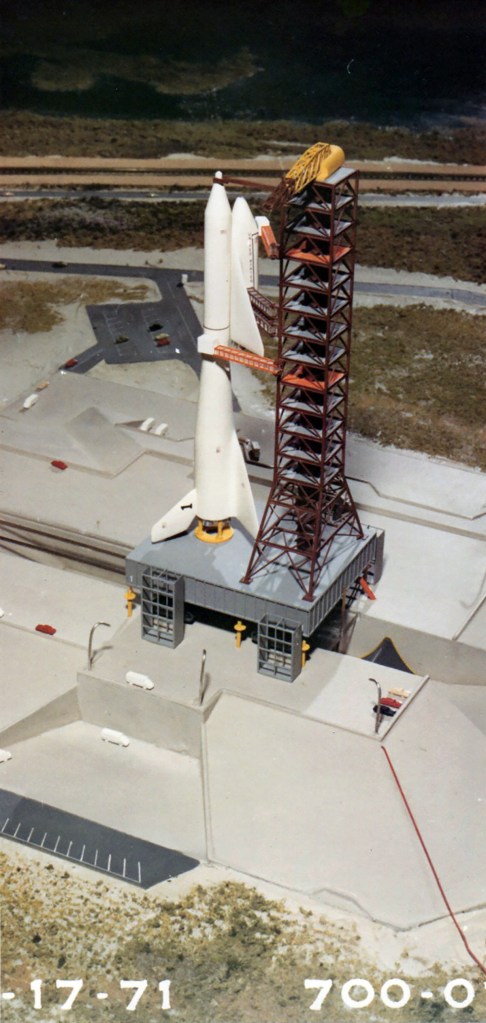
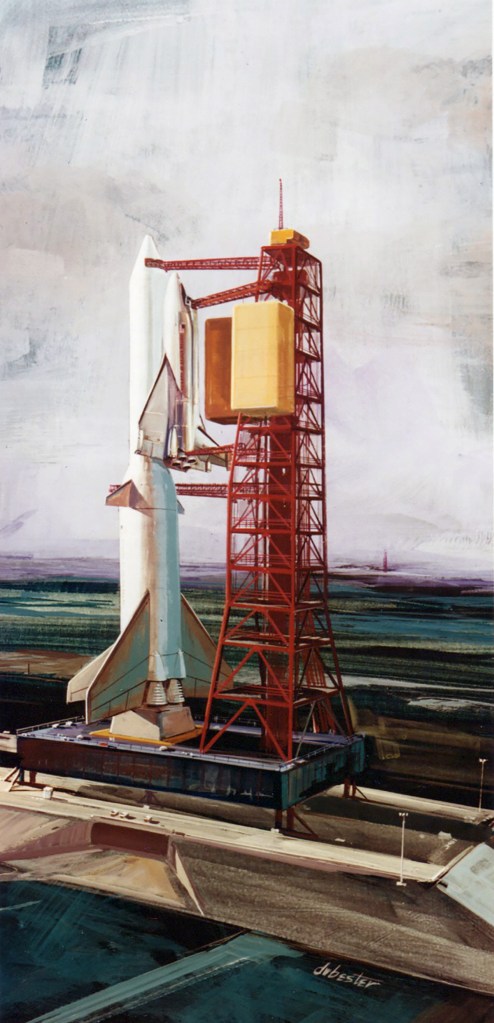
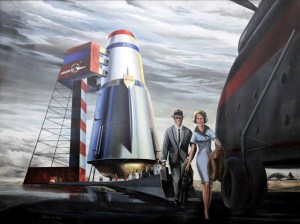
I’m pretty certain these two images are by the same hand, but which one? They’re both heavily referenced and painted in what I would describe as North American Rockwell’s house style, but the palette and brushwork bring me back to a beautiful painting Don Bester did of the Saturn Shuttle. I could be wrong, but that’s the box I’m checking for now.

Image credit: North American Rockwell
Image source: Mike Acs
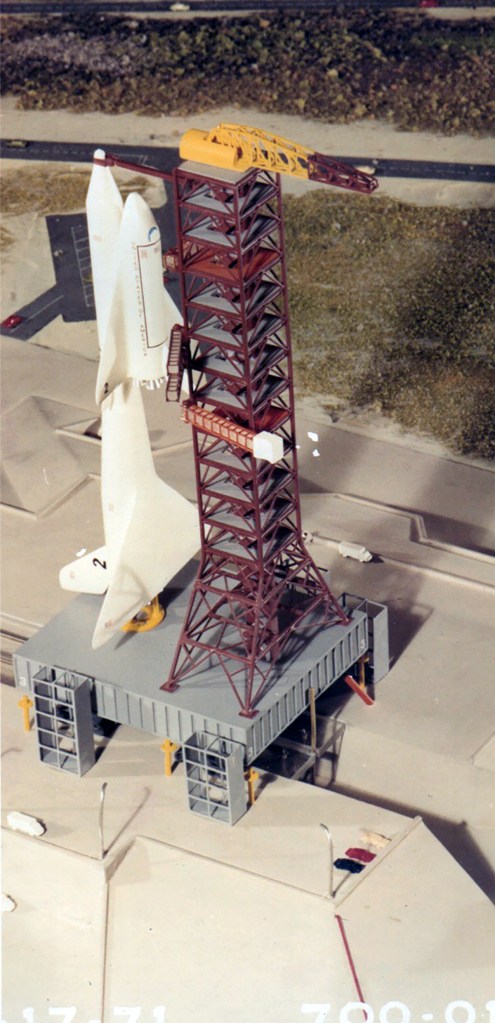
B-18E

Image credit: North American Rockwell
Image source: Numbers Station

Shuttle by Donald Bester

Image credit: North American Rockwell
Image source: Numbers Station

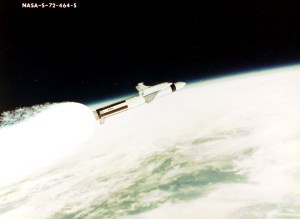
S-72-464-S

Image credit: NASA
Image source: SDASM Archives

Booster Separation

Exploring Tomorrow in Space
Thomas Becker
Sterling, 1972

Image credit: Grumman
Image source: Numbers Station

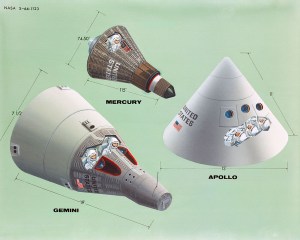
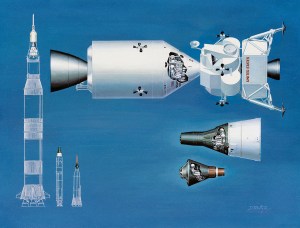
The Apollo Family Tree

Image credit: NASA Johnson
Image source: NASA Images

Titan III C

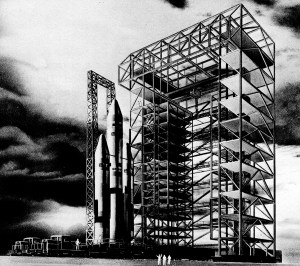
The huge Titan III C vehicle, towering over 150 feet into the air, moves into place on the launch pad. Missile is carried on same railroad car on which its parts were assembled.

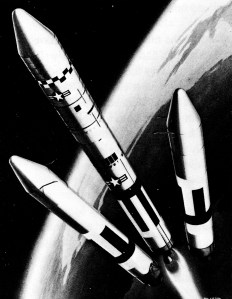
Once the solid rockets have lifted Titan III C and it’s payload off the ground, their role is finished. As this sketch shows, when the solids burn out, they separate from the core section. Just before solid burnout, the first-stage liquid propellant engines are ignited to push the spacecraft farther towards space.

Course of the Titan III and it’s payload is monitored from a launch center such as this.

Orbiting Stations: Stopovers to Space Travel
Irwin Stambler
G.P. Putnam’s Sons, 1965

Image credit: USAF
Image source: National Archives

TITAN

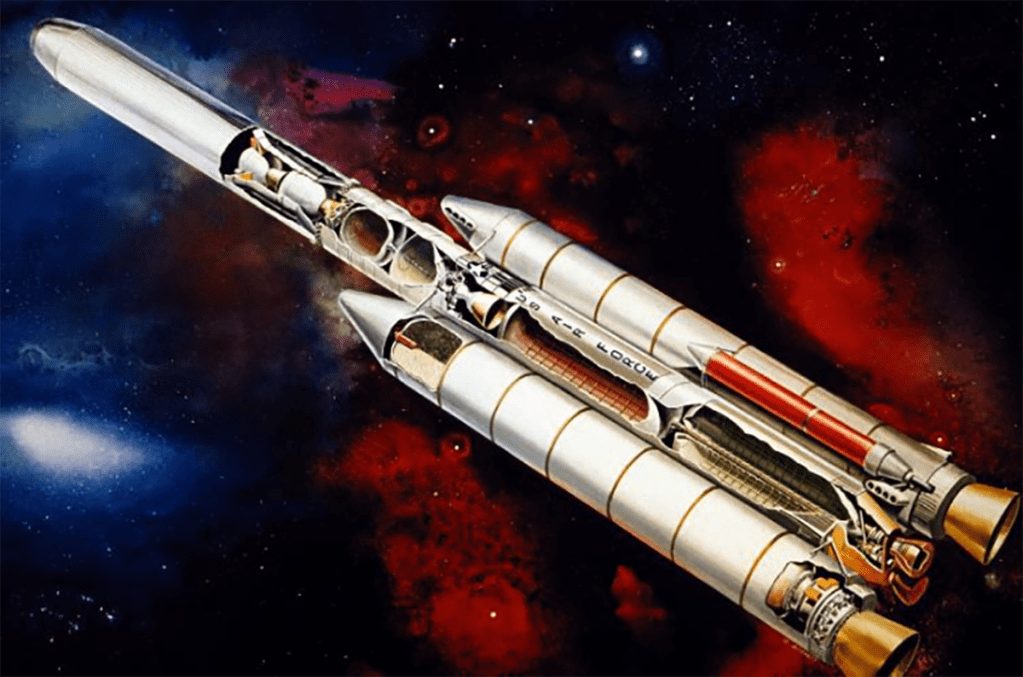
Artist’s concept of the Titan standard launch vehicle 34-D entering the space.

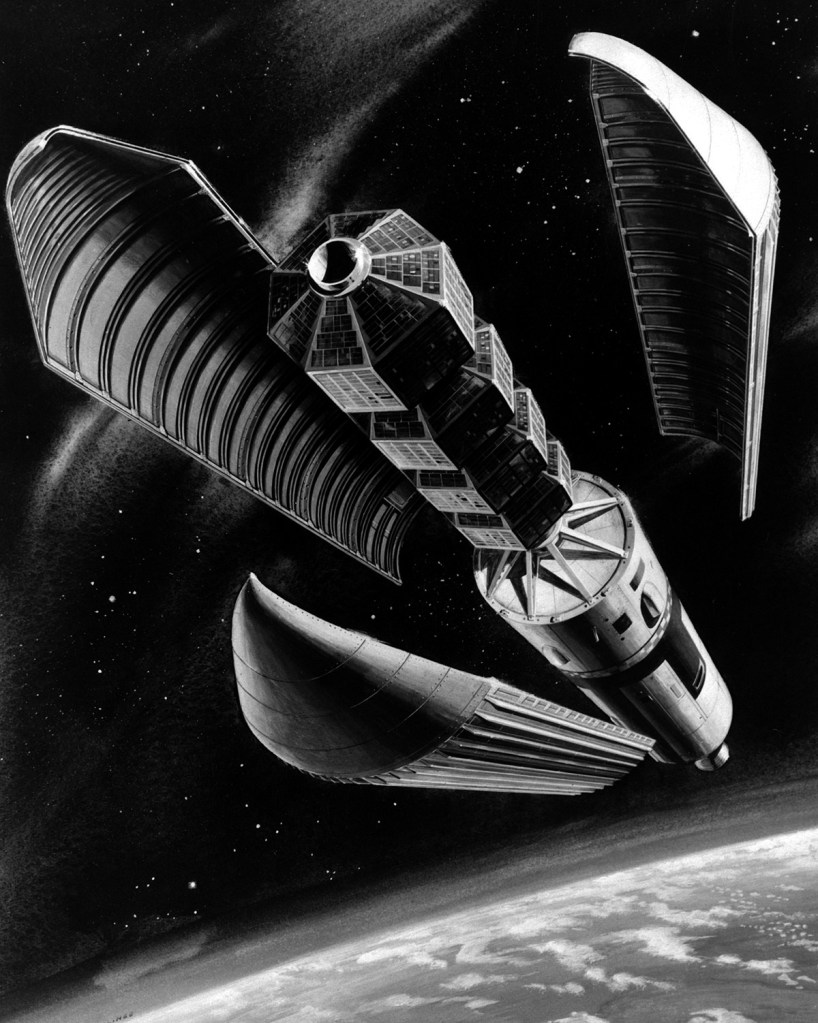
An artist’s concept of the new modular three-section fairing for the Air Force’s Titan III-C space launch vehicle.

Image credit: USAF
Image source: National Archives

All-Purpose Space Vehicle

  1. All-purpose space vehicle proposed by Douglas Missile & Space Systems Division engineer Phil Bono, is pictured in artist’s concept during refueling in earth orbit prior to flight to the moon.
  2. Refueling tankers, on either side will return to earth. Vehicle carries up to eight “strap-on” liquid hydrogen tanks, which can be ejected after they are emptied or retained for use on moon. Retro engines are fire as spacecraft nears lunar surface to allow a direct landing without an orbital maneuver. All-purpose space vehicle proposed by Douglas Missile & Space Systems Division engineer Phil Bono, is pictured in artist’s concept during refueling in earth orbit prior to flight to the moon.
  3. Empty strap-on tanks are lowered to lunar surface before each return flight.
  4. These liquid hydrogen tanks could be used as shelter for pioneering lunar colony.

Space World
December 1964, VOL. A-14

Image credit: Douglas
Image source: Numbers Station